Why American Ears Are Turning Toward the Sound of Dalmatia
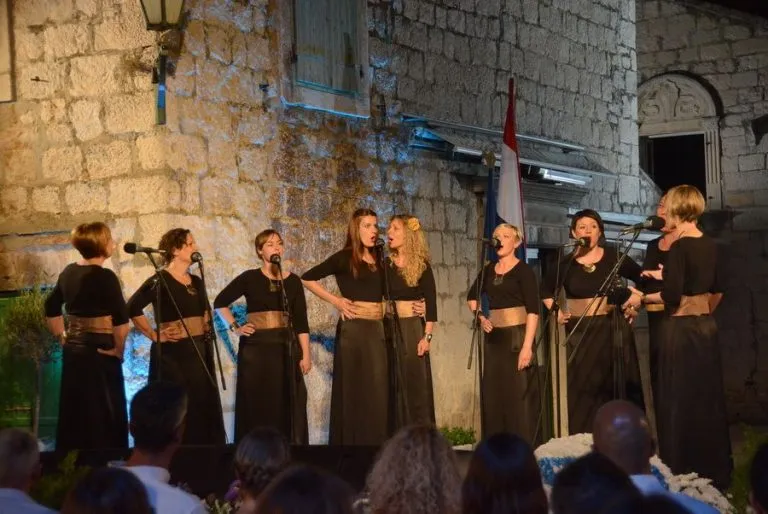
Photo: Croatian klapa singers traditional Dalmatian folk music performance coastal, via total-croatia-news.com
Pull up your Spotify Discover Weekly on any given Monday and you might find yourself surprised. Between the indie folk tracks and the ambient playlists, there's a growing chance you'll encounter something that stops you cold — a voice, or a cluster of voices, singing in a language you don't recognize, in harmonies that feel both ancient and urgent. If you've been lucky, that sound is coming from Dalmatia.
We're living through a genuinely interesting moment in how American listeners discover world music. Streaming platforms have essentially demolished the old gatekeeping structures, and music that would have required a specialty record store, a well-traveled friend, or a very specific radio station to find is now one algorithm nudge away from anyone's ears. For Dalmatian folk music — and for the contemporary Croatian artists who are building on that tradition — the timing couldn't be better.
What Does Dalmatian Music Actually Sound Like?
Let's start with the basics, because "Dalmatian music" covers a lot of ground.
At its oldest and most distinctive, you're talking about klapa — a cappella vocal harmony singing that developed along the Croatian coast and islands. Klapa groups, traditionally all-male though that's been changing, sing in tight, emotionally intense harmonies about the sea, longing, love, and home. The UNESCO recognized klapa singing as an intangible cultural heritage of humanity in 2012, but that kind of institutional recognition doesn't capture what it actually feels like to hear it live, or even through a good pair of headphones.
It feels like something pressing against your chest from the inside.
Then there's the ganga — a rougher, more raw style of singing from the Dalmatian hinterland, including the areas around Benkovac. Where klapa is polished and coastal, ganga is mountain and stone. It's dissonant by design, with voices intentionally clashing in ways that take some adjustment for ears trained on Western harmony. But once it clicks, it's unforgettable. Ganga sounds like the landscape it comes from: hard, honest, and strangely beautiful.
Beyond these vocal traditions, the region has a rich instrumental heritage built around instruments like the lijerica (a small bowed instrument with a distinctly haunting tone) and the tamburica (a lute-like string instrument that shows up across Croatian folk music in various forms).
The Benkovac Sound — Inland, Unpolished, Unforgettable
Benkovac sits in the Ravni Kotari, inland from the Adriatic coast, and the music of this area carries that geography in its DNA. This isn't the sun-drenched, tourist-friendly sound of the coastal resorts. It's harder-edged, more austere, and more emotionally direct.
Local musicians from the Benkovac area have been the quiet backbone of regional folk festivals for decades. Groups that perform traditional ojkanje — another UNESCO-recognized Croatian vocal style involving a distinctive trembling technique — are still active in villages around the region, often performing at local celebrations, religious festivals, and cultural events that rarely get coverage outside of Croatia.
But things are changing. Younger musicians from this part of Dalmatia are starting to work with these traditions in new ways — not abandoning them, but not treating them as museum pieces either. Producers in Zagreb and Split are collaborating with folk singers from the interior, layering traditional vocal styles over contemporary arrangements. The results are genuinely compelling, and they're starting to find audiences well beyond Croatia's borders.
Streaming Numbers Don't Lie
Spotify's internal data (shared periodically through their Loud & Clear transparency reports) shows consistent growth in listener engagement with Croatian music from outside the country, with North American audiences representing a meaningful slice of that growth. Apple Music curators have added Croatian and Balkan folk playlists to their editorial rotation, and YouTube channels dedicated to traditional Croatian music regularly pull view counts that would have seemed impossible a decade ago.
Part of what's driving this is the broader global folk and "world music" resurgence that's been building throughout the 2020s. American listeners who fell in love with artists like Heilung, Huun-Huur-Tu, or the Gipsy Kings at various points in their musical lives have developed a genuine appetite for music that sounds rooted in something specific and real. Dalmatian folk — with its unmistakable vocal textures and its sense of place — fits that appetite perfectly.
There's also a Croatian-American diaspora effect that shouldn't be underestimated. Communities in cities like Chicago, Cleveland, Pittsburgh, and Los Angeles have deep Croatian roots, and social media has made it easier than ever for second- and third-generation Croatian-Americans to reconnect with their heritage through music. When they share a klapa video or a contemporary Croatian artist on Instagram, it lands in feeds that extend well beyond the diaspora community.
Artists to Know Right Now
If you're new to this world and want a starting point, here are a few names worth searching on your platform of choice:
Klapa Šufit from Split has been one of the most accessible entry points for international audiences — their recordings are clean, emotionally powerful, and immediately gripping even for listeners with no prior exposure to klapa.
Dunja Knebl is a Croatian folk revival artist whose work draws heavily on traditional forms from across the country, including the Dalmatian interior. Her approach is scholarly but never dry — she makes this music feel alive.
For something more contemporary, Vatra and Hladno Pivo represent a Croatian rock scene that has deep folk roots running underneath the electric guitars. Neither band is strictly "folk," but their connection to Croatian musical tradition is real and audible.
And for the most adventurous listeners: seek out recordings of raw ganga singing from the Dalmatian hinterland. It won't sound like anything you've heard before. Give it three or four listens before you decide how you feel about it.
Radio Benkovac and the Transatlantic Connection
This is, in a sense, exactly what Radio Benkovac exists to do — build a bridge between the Dalmatian heartland and the wider world, including the growing American audience that's finding its way to this music through streaming platforms, diaspora communities, and simple curiosity.
We play this music not because it's exotic or because it needs to be preserved like a butterfly in amber, but because it's alive. The people making it are alive. The traditions behind it are being actively practiced, argued over, evolved, and loved by real communities in real places — including Benkovac and the surrounding region.
When an American listener in Nashville or Portland or Minneapolis stumbles onto a ganga recording at midnight and feels something shift in their chest, that's not an accident. That's what music from a specific, deeply lived place does when it finds the right ears.
We're glad you're listening. Stick around — there's a lot more where that came from.