Forget the Foam Panels: American Producers Are Building Their Best Work Inside Croatian Stone Walls
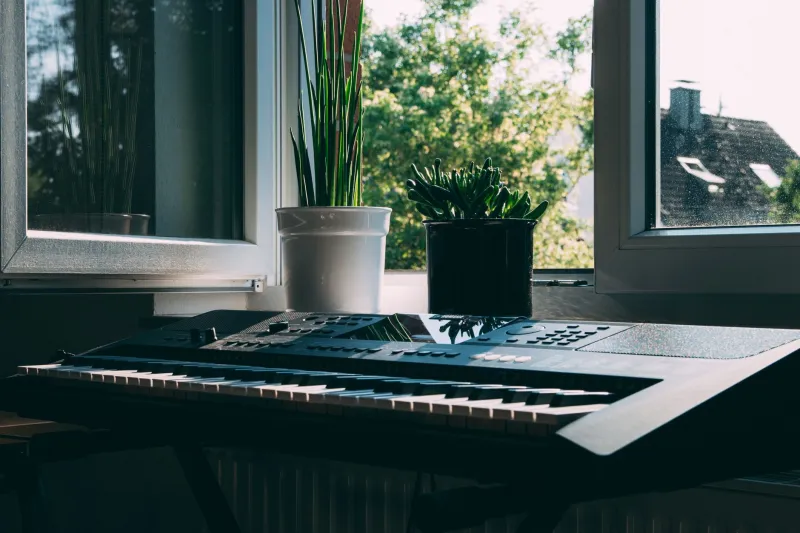
For most of music history, the ideal studio looked pretty much the same: a treated room, a thick door, maybe a view of a parking lot if you were lucky. Acoustic foam. Baffles. Diffusers. A coffee machine that's seen better days. The assumption was always that great sound required engineering — that you had to build isolation into a space because the world outside was the enemy.
Benkovac, a medieval town tucked into the Dalmatian hinterland of Croatia, is quietly making that assumption look very, very outdated.
Over the past couple of years, a steady stream of American musicians, producers, and audio professionals has been finding their way to this corner of the Šibenik-Knin County — not because of a trend piece, not because some influencer pointed the way, but because word travels. And what they're finding here is turning a lot of studio-design orthodoxy on its head.
What 'Home Studio' Used to Mean
Ask any bedroom producer in the US what they're working with, and you'll get a familiar story. A spare room. Rugs on the walls. Maybe some bass traps in the corners. Neighbors who sometimes cooperate and sometimes very much do not. The digital audio workstation is powerful enough; the room is the variable nobody ever quite solves.
For professionals, the answer was always to rent time in a proper facility — pay for the treated space, the outboard gear, the engineer who knows where the weird hum comes from. But that model has been crumbling for years. Streaming economics don't support $1,500-a-day studio rates the way record deals once did. And the pandemic proved, conclusively, that remote production wasn't just possible — it was sometimes better.
So the question shifted. If you're going to build your own space anyway, why not be intentional about where that space is?
The Benkovac Answer
Marcus T., a mixing engineer from Nashville who relocated to Benkovac eighteen months ago, put it plainly when we caught up with him over a video call from his rented stone house on the edge of town.
"Back home, I was spending maybe four hundred dollars a month just on acoustic treatment and equipment upgrades, always chasing a room that sounded right," he said. "Here, I pay the equivalent of about three hundred and fifty dollars for the whole apartment — walls that are two feet thick, ceilings that are vaulted, and a courtyard where I can literally hear nothing but wind and birds. The room is the treatment."
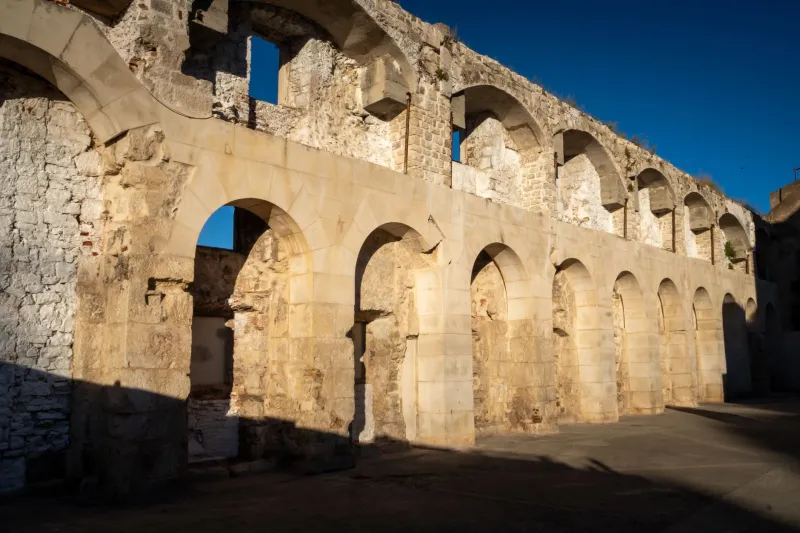
That's the core of what people in Benkovac's growing creative community are calling the Benkovac Effect, though nobody gave it that name officially — it just stuck. The town's vernacular architecture, built from local limestone over centuries, produces a natural acoustic profile that engineers describe with words usually reserved for high-end studio builds: warm, controlled, present. The stone absorbs certain frequencies and reflects others in ways that, by accident or ancient craft, happen to work remarkably well for recording.
Combine that with near-zero ambient noise — Benkovac sits far enough from major highways and flight paths that background noise readings here would embarrass most American neighborhoods — and you start to understand why people are making the trip.
Isolation as Strategy, Not Sacrifice
There's a psychological dimension to this that's worth taking seriously. Jenna R., a singer-songwriter from Portland who spent three weeks in Benkovac on what she describes as "a writing retreat that turned into a life pivot," talked about what the isolation actually felt like from the inside.
"Everyone told me I'd go crazy being away from my scene, away from the energy of a city," she said. "And for the first four days, honestly, I kind of did. I kept reaching for my phone, checking what was happening back home. But then something clicked. The quiet stopped feeling like absence and started feeling like space. I wrote more in those three weeks than I had in the previous year."
This reframing — isolation as strategic resource rather than creative penalty — is one of the more interesting cultural shifts bubbling up out of Benkovac. The town doesn't offer the networking, the industry proximity, or the constant stimulus of a music hub like Los Angeles or New York. What it offers instead is a kind of enforced focus that, for certain kinds of creative work, turns out to be exactly what's needed.
Daniel K., a film composer originally from Chicago, has been splitting his time between the US and Benkovac for two years now. He's blunt about the trade-offs.
"You're not going to bump into a label exec at a coffee shop here. Nobody's going to offer you a sync deal because they saw you play a showcase. That stuff doesn't happen. But if you need to write forty minutes of orchestral music in two months? This place is a weapon. Nothing interrupts you. Nothing pulls you sideways. You just work."
The Infrastructure Question
The obvious concern for any American considering this kind of move is practical: can you actually run a professional operation from a small Croatian town?
The answer, increasingly, is yes — with caveats. Benkovac has solid internet connectivity, which is non-negotiable for producers who need to send large session files, collaborate remotely, or stream content. The town is a manageable drive from Split, where you can access international shipping, better-stocked gear suppliers, and a proper airport. And the local community, while small, has become more attuned to the needs of creative professionals over time — there are people here who understand what a condenser microphone is, which wasn't always the case.
The caveats are real, though. If you need hands-on collaboration, spontaneous session work, or the kind of creative friction that comes from being embedded in a music scene, Benkovac will frustrate you. It rewards a particular working style: self-directed, project-focused, comfortable with long stretches of solitude. Not everyone is built for that.
A Different Kind of Benchmark
What's most interesting about the Benkovac conversation, from where we sit at Radio Benkovac, is what it says about how the definition of a professional workspace is evolving. For a long time, the home studio was understood as a compromise — something you used when you couldn't afford the real thing. The goal was always to get out of it and into a proper room.
That logic is inverting. The producers and engineers landing in Benkovac aren't here because they can't afford better. Several of them have credits on projects that would make the foam-panel crowd blush. They're here because they've decided that the real thing might not be what they always assumed it was.
A medieval town in the Dalmatian hinterland, with thick limestone walls and a silence so complete it almost has texture — that, for a growing number of American musicians, is starting to look a lot like the studio they always wanted.
We've been playing their music on Radio Benkovac for a while now. Turns out, it sounds pretty good.