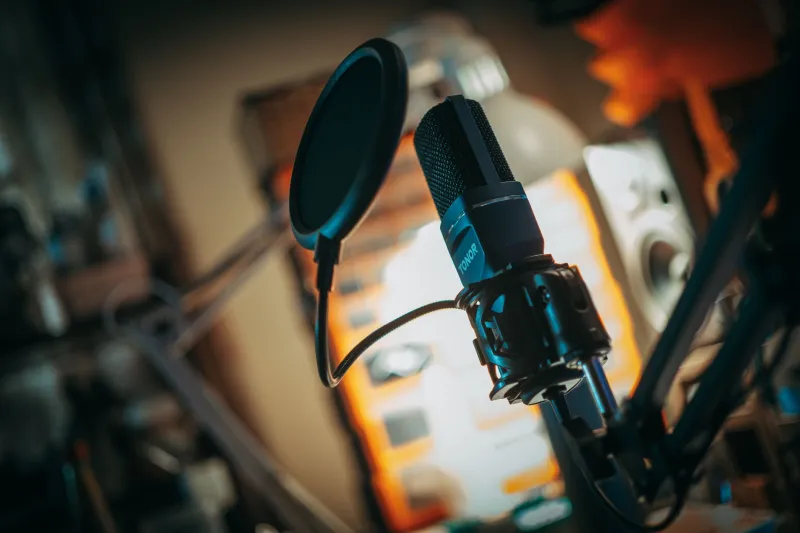
Stone Cold Perfect: Why Recording Engineers Are Booking Flights to Benkovac for the World's Most Natural Reverb
There's a moment every audio engineer knows — that instant when a room just sounds right. The way a snare drum blooms into the air. The way a vocal hangs in space without getting muddy. Most engineers spend entire careers chasing that feeling inside padded, climate-controlled studios, surrounded by thousands of dollars' worth of gear trying to simulate something organic.
Some of them are done simulating. They're coming to Benkovac instead.
What Happens When Sound Hits a Thousand-Year-Old Wall
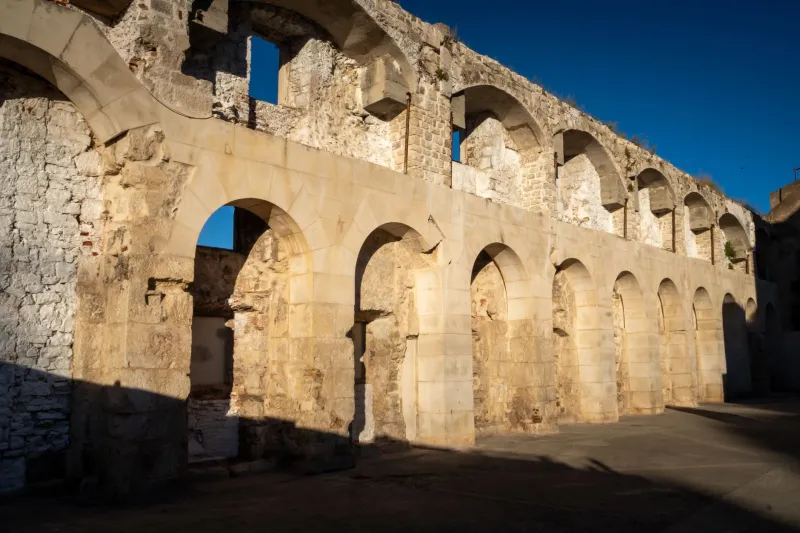
Benkovac sits in the Dalmatian hinterland of Croatia, a town built on and around limestone karst — the same dense, ancient rock that forms the bones of the Dinaric Alps. The medieval fortifications, crumbling Roman-era foundations, and centuries-old stone farmhouses that define the town's landscape weren't designed with acoustics in mind. But physics doesn't care about intention.
Limestone is what engineers call a hard parallel surface material, but with a twist: its natural porosity and irregular surface texture scatter high-frequency sound waves rather than bouncing them back as harsh, digital-sounding reflections. The result is a reverb tail that's warm, diffuse, and — crucially — organic in a way that no plugin has ever fully nailed.
"I've used every reverb unit on the market," says Marcus Dill, a Nashville-based producer who made the trip to Benkovac last spring to track an acoustic record. "Lexicon, UAD, Valhalla — they're all incredible. But when I set up a pair of room mics inside one of the old stone outbuildings near the Benkovac fortress and hit a guitar chord, I actually laughed out loud. You can't buy that."
Dill spent ten days working in and around the town, recording guitar, upright bass, and vocal takes in spaces that ranged from a restored stone wine cellar to a partially open-air ruin with a collapsed roof. Each space, he says, had its own acoustic fingerprint — something no amount of plugin automation can replicate.
The Science Behind the Sound
To understand why Benkovac's architecture works so well for recording, it helps to think about what engineers are actually trying to achieve when they talk about "room sound."
Every enclosed space has a decay time — how long it takes for a sound to fade to inaudibility after the source stops. It also has a frequency response, meaning some pitches decay faster or slower than others. In a typical modern recording studio, these properties are carefully engineered using absorption panels, diffusers, and bass traps. The goal is usually a controlled, neutral space that doesn't add unwanted color.
But for certain genres — folk, Americana, jazz, ambient, experimental — engineers actually want the room to be a participant. They want that color. And that's where Benkovac's stone architecture becomes remarkable.
The thick limestone walls — often a meter or more in depth — provide natural low-frequency absorption that keeps bass from getting boomy. Meanwhile, the rough-hewn irregular surfaces scatter mid and upper-mid frequencies beautifully, creating what acousticians call early reflections that arrive at the microphone from dozens of slightly different angles and timing offsets. To your ears, this translates as richness, depth, and a sense of space that feels lived-in.
"The pre-delay on some of these rooms is incredible," explains Korina Vučić, a Zagreb-based sound engineer who has been quietly documenting Benkovac's acoustic spaces for the past two years. "You get this natural separation between the direct sound and the first reflection that gives vocals a sense of size without washing them out. I've measured rooms in this region with reverb tails between 1.8 and 3.2 seconds — and the tails are smooth. No flutter echo, no resonant modes piling up. Just clean, even decay."
Vučić's work has started attracting attention from engineers in Germany and the UK, and she's cautiously optimistic — if a little protective — about what wider awareness might mean for the region.
Caves, Cellars, and Fortresses
Beyond the town's stone buildings, the surrounding karst landscape offers acoustic environments that are genuinely one-of-a-kind. The limestone caves of the broader Dalmatian hinterland — some of them accessible within a short drive of Benkovac — present an entirely different sonic palette: longer decay times, more pronounced low-frequency resonance, and an almost cathedral-like sense of scale.
American ambient and electronic producers have been particularly interested in these natural spaces. Brooklyn-based producer and composer Nate Arlen, who records under the alias Pale Karst (a nod to the geology he fell in love with during a trip through Croatia), recorded an entire EP using a portable recorder, a small synthesizer, and the natural acoustics of a cave system near the Benkovac area.
"I wasn't even thinking about it as a recording trip at first," Arlen says. "I was just traveling. But I brought a Zoom H6 because I always do, and when I walked into this cave and hummed to myself, I almost dropped the thing. I ended up spending four hours in there. The EP basically wrote itself."
The resulting record, released independently, picked up significant attention in ambient music circles in the US — partly for its sound design, but mostly because listeners kept asking what reverb he'd used. His answer — "a cave in Croatia" — became something of a talking point.
A Resource Worth Protecting
Not everyone in the local audio community is racing to publicize these spaces. There's a real conversation happening in Benkovac and among Croatian sound professionals about how to balance outside interest with the preservation of both the physical sites and the cultural context that makes them meaningful.
These aren't just acoustic props. The fortress, the old farmhouses, the wine cellars — they're the physical memory of a community. Treating them purely as exotic recording locations risks flattening their meaning.
That concern is valid. And it's one that the engineers and producers who've worked here most thoughtfully seem to take seriously. The ones who stay longer, collaborate with local musicians, and approach the spaces with genuine curiosity rather than Instagram-ready ambition tend to come away with something more interesting anyway.
Marcus Dill put it plainly: "The best thing I recorded on that trip wasn't the guitar takes. It was a conversation I had with an older guy who lived near one of the buildings we were using. He talked for twenty minutes about what that place meant to his family. I had my recorder running. That's going on the record too."
The Reverb You Can't Download
There are dozens of sample packs and impulse response libraries out there claiming to capture the sound of famous cathedrals, concert halls, and ancient ruins. Some of them are genuinely excellent. None of them are the same as being there.
Benkovac's stone isn't going anywhere. The limestone has been here for millions of years, and the walls built from it have stood for centuries. But the awareness of what those walls can do for a recording — that's new, and it's spreading.
For now, the town remains quiet enough that a producer can set up a microphone in a stone room, hit a chord, and hear something that no plugin library has ever captured. Whether that lasts depends on how the people who discover it decide to treat what they've found.
Radio Benkovac will be listening.