Beats from the Karst: Inside Benkovac's Quietly Booming Electronic Music Scene
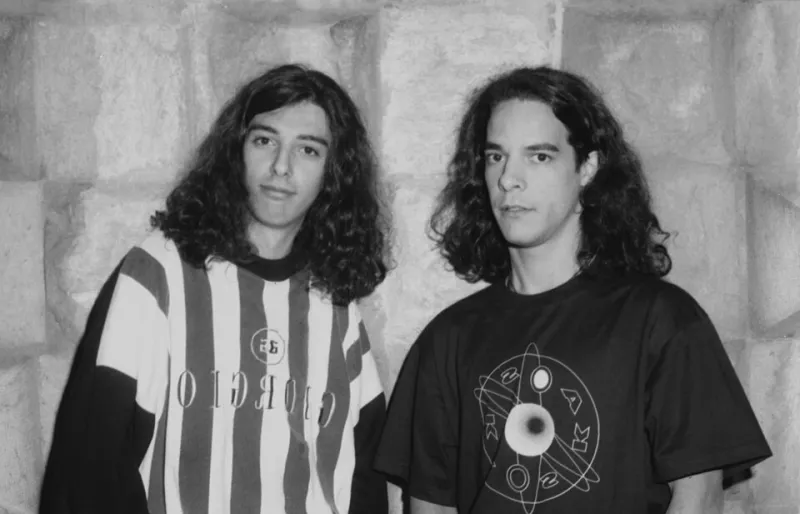
Photo: Ithaka Darin Pappas, CC BY-SA 4.0, via Wikimedia Commons
If you asked most music fans to name the world's electronic music capitals, you'd get the usual suspects — Berlin, Detroit, Amsterdam, maybe London. Benkovac, a compact Dalmatian town nestled between rocky karst hills and the Adriatic coastline, wouldn't make most people's lists. But that's starting to change, and the producers making it happen are pretty okay with flying under the radar — for now.
Over the past several years, a loose but growing community of electronic musicians and ambient producers has quietly set up shop in and around Benkovac. They're working out of converted stone houses, repurposed agricultural buildings, and modest home studios kitted out with gear that would make any Brooklyn beatmaker jealous. The results are landing on international playlists, catching ears at European festivals, and drawing curious collaborators from cities far larger and louder than this one.
So what exactly is going on here?
The Economics of Creative Space
Ask any producer why they landed in Benkovac and the answer usually starts with the same two words: rent prices.
"I was paying close to two thousand euros a month for a cramped studio apartment in Zagreb," says Luka, a producer who records under the name Vapori and whose ambient work has appeared on several Spotify editorial playlists across Europe and North America. "I moved to Benkovac, rented a whole stone house with a courtyard for less than four hundred, and suddenly I had room to actually build the studio I'd been dreaming about for years."
That math is hard to argue with. For American readers used to hearing about the creative exodus from cities like New York, Los Angeles, and San Francisco — where rising costs have pushed artists into the suburbs or out of state entirely — Benkovac's appeal will feel familiar. Affordable space doesn't just save money. It removes the financial pressure that kills creativity. When you're not scrambling to make rent on a closet-sized apartment, you can afford to spend three weeks experimenting with a single sound design idea.
And in electronic music, that kind of patience pays off.
The Landscape as a Collaborator
But economics alone don't explain what's happening here. Plenty of cheap places exist in Europe. Benkovac has something those places don't — a natural environment that seems almost engineered to inspire a certain kind of sound.
The karst landscape surrounding the town is genuinely eerie in the best possible way. Limestone formations stretch across rolling terrain, punctuated by dry riverbeds, ancient ruins, and a silence so complete it almost has texture. Drive twenty minutes in any direction and you're either at the Adriatic coast or deep in a landscape that feels like it belongs to a different century entirely.
"I record field audio constantly," says Ana, who produces textural ambient music under the name Tiha Voda — Croatian for "still water" — and has been based near Benkovac for three years. "The wind through the stone walls, the specific echo you get in certain valleys, the sound of the sea at dawn before anyone else is awake. Those recordings end up in everything I make. You can't replicate that in a city."
This relationship between landscape and sound design has become something of a signature for the Benkovac scene. The music coming out of the area tends to carry a certain spaciousness — lots of room, long reverb tails, field recordings woven into synthetic textures. Critics have described it variously as "coastal ambient," "Mediterranean drone," and, in one memorable review from a Berlin-based electronic music blog, "the sound of somewhere ancient trying to figure out what comes next."
A Community That Actually Talks to Each Other
One of the stranger ironies of modern music production is that it's never been more solitary. Bedroom producers in major cities can go weeks without meaningful creative conversation, surrounded by millions of people who have no idea what they're working on. Benkovac, by contrast, is small enough that everyone in the local music community eventually ends up in the same room.
"There are maybe fifteen or twenty of us working seriously in electronic music within driving distance of each other," says Marko, who runs a small digital label called Kamena Ploča — Stone Slab — that has released work by several local producers and recently signed a distribution deal that gets its catalog into US streaming markets. "We share equipment, we share knowledge, we play each other rough mixes. It feels like what I imagine the early Detroit techno scene felt like, except slower and with better olive oil."
That collaborative density has accelerated everyone's output. Producers who might have spent years working in isolation are getting feedback, finding collaborators, and releasing music faster. Kamena Ploča has put out fourteen releases in the past two years, and Marko says the pipeline is fuller than ever.
Getting Heard Beyond the Dalmatian Coast
The question any emerging scene eventually has to answer is whether it can connect with audiences beyond its immediate geography. For Benkovac's producers, the answer is increasingly yes — and the internet is doing most of the heavy lifting.
Several artists from the area have built substantial followings on platforms like Bandcamp and SoundCloud without any traditional label support or press campaigns. Vapori's most recent EP has been streamed over two hundred thousand times on Spotify alone, with listeners spread across the US, Germany, Japan, and Australia. Tiha Voda's work has been featured on ambient music YouTube channels with subscriber counts in the hundreds of thousands.
For American listeners curious about what this scene actually sounds like, the entry point is easier than you'd think. Search "Kamena Ploča" on any major streaming platform and you'll find a solid cross-section of what's coming out of the region. Or tune into Radio Benkovac's music programming, where local producers occasionally share new work before it hits the wider internet.
What Comes Next
Nobody in Benkovac seems particularly interested in turning the town into the next Ibiza or even the next Reykjavik — another small place that punched well above its weight in music. The producers here tend to be suspicious of hype, partly by temperament and partly because they've watched hype ruin places they used to love.
"If this stays small and real, it'll keep producing interesting music," Ana says. "The moment it becomes a brand, I'll probably move somewhere else that nobody's heard of yet."
Fair enough. For now, the beats keep coming out of the karst, landing on playlists far from the Dalmatian coast, and carrying with them something that's genuinely hard to manufacture — the sound of a place that hasn't decided to perform itself for anyone yet.