Skip the Crowds: Why Gen Z Is Trading Barcelona for a Medieval Croatian Town You've Probably Never Heard Of
Somewhere between the fifteenth century and last Tuesday, Benkovac became cool.
Not resort-town cool. Not Instagram-filter cool. The other kind — the kind that spreads through word of mouth before the algorithm catches up, the kind where people are still slightly surprised when you say you've heard of it. Ask a twenty-three-year-old from Austin or a college student from Chicago where they're spending their summer, and a growing number of them will pull up a map of Dalmatia's interior and point to a dot that most travel guides still don't bother mentioning.
Benkovac. Population just over eleven thousand. Medieval fortress. Stone streets. Zero beach clubs.
So what exactly is going on?
The Post-Overtourism Pivot
To understand why Benkovac is having a moment, you have to understand what Gen Z is running away from. Barcelona is overrun. Dubrovnik has been called out in every "places ruined by tourism" think piece published in the last decade. Prague, Budapest, Amsterdam — the hits keep coming. Young travelers who grew up watching their favorite spots get swallowed by cruise-ship crowds and souvenir shops are actively looking for somewhere that hasn't been processed yet.
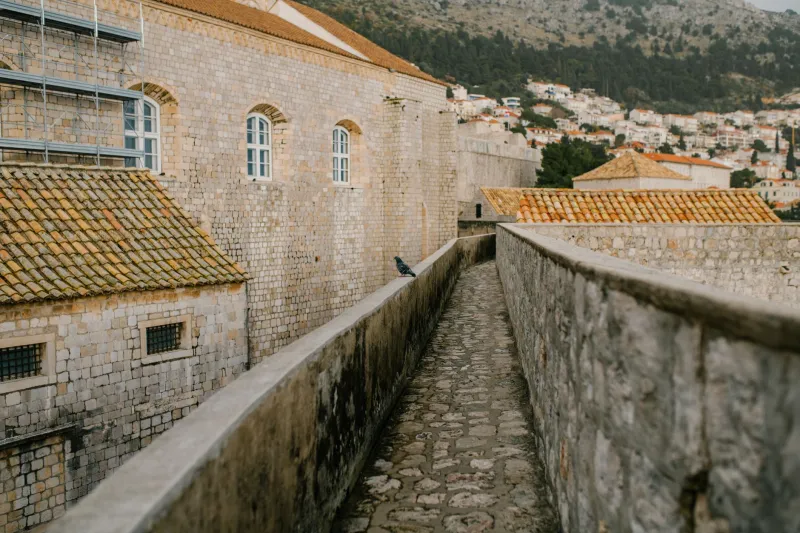
Benkovac fits that description almost perfectly. It's not underdeveloped — there's reliable Wi-Fi, decent coffee, and enough restaurants to keep you fed and happy for weeks. But it hasn't been packaged. Nobody's built a hop-on-hop-off bus route through the old quarter. There's no "Instagram museum" charging fifteen euros for a photo op. What you get instead is a medieval Dalmatian town that has been quietly living its life, largely unbothered, while the rest of Europe's tourist infrastructure buckled under its own weight.
That combination — authentic but accessible — is exactly the sweet spot Gen Z has been hunting.
The TikTok Trail
Credit where it's due: a handful of creators put Benkovac on the map before the travel industry caught on. A short-form video of the Benkovac fortress at golden hour, posted by a Croatian-American creator with a modest but devoted following, racked up shares in travel communities across Reddit and TikTok last spring. The comments were predictable: where is this? and this looks fake and adding this to my list immediately.
From there, the algorithm did what algorithms do. More creators passed through. More videos got made. The footage practically shoots itself — limestone walls catching afternoon light, the vast Ravni Kotari plain stretching out toward the horizon, a café table with a glass of local wine and exactly zero other tourists in the background.
Maja, who runs a small guesthouse on the edge of the old town and has been hosting travelers for nearly a decade, noticed the shift almost overnight. "Last year I started getting inquiries from people in California, in New York, in places I never expected," she says. "Young people, mostly. They'd seen something online and wanted to come see it for themselves. It was a little surprising at first."
Surprising, but not unwelcome — at least not yet.
Filming Location Fame
Social media isn't the only engine driving the attention. Benkovac and the surrounding Dalmatian interior have quietly become a go-to location for European film and television productions looking for scenery that doesn't look like every other scenery. The karst landscape, the fortress ruins, the particular quality of light in the region — it all photographs beautifully without requiring much set dressing.
When productions roll through, they bring crew members who talk about the place afterward. Those crew members have followers. The cycle continues. It's a slower burn than a viral TikTok, but it's arguably more durable — the kind of reputation that builds up in layers rather than spiking and collapsing.
Local tourism coordinator Darko puts it diplomatically: "We weren't planning for this level of interest. But we're not complaining either. We're just trying to make sure that what people come to see is still here when they arrive."
The Authenticity Tightrope
That last sentence carries a lot of weight. Anyone who has watched a beloved neighborhood or small town get discovered knows how quickly the thing that made it special can disappear under the pressure of its own popularity. Benkovac's community is aware of this, and the conversations happening at the local level reflect a genuine tension between economic opportunity and cultural preservation.
Business owners want the foot traffic. Families who have run restaurants and shops for generations are grateful for new customers. But there's a real wariness about the kind of transformation that turns a living town into a theme park version of itself — all the aesthetics, none of the soul.
Ivana, who makes and sells traditional Dalmatian food products at a small shop near the market, puts it plainly: "I want people to come and try real food and learn something real. I don't want to become a prop in somebody's travel video. There's a difference."
It's a distinction that resonates. The travelers who are currently drawn to Benkovac — the ones who chose it specifically because it isn't packaged — tend to be more sensitive to that line than the average tourist. Whether that remains true as the numbers grow is the open question.
What Benkovac Offers That Bigger Destinations Don't
Spend a few days here and the appeal becomes obvious in ways that are hard to put into a caption. The pace is different. The food is rooted in the land in a way that farm-to-table marketing copy can only approximate. The fortress isn't behind a ticket booth — you can walk up to it, sit on the stones, and look out over the plain without anyone rushing you along.
For American travelers especially, there's something disorienting in the best way about a place that hasn't been optimized for visitors. The menus aren't in six languages. The locals aren't performing hospitality — they're just living their lives and, more often than not, happy to share a table and a conversation if you approach with some humility.
That's the thing about Benkovac that no algorithm can fully capture. It rewards slowness. It rewards curiosity. It rewards the traveler who is willing to show up without a plan and figure it out.
A Radio Town in a Streaming World
Here at Radio Benkovac, we've been watching this shift with a mix of pride and protectiveness that probably mirrors how a lot of locals feel. This region has always had a story worth telling — the history, the music, the food, the landscape. It's nice that the world is starting to listen.
But the best version of this story is one where Benkovac stays Benkovac. Where the people who live here set the terms. Where the visitors come to experience something genuine and leave having actually experienced it, rather than just photographed it.
Gen Z, for all the grief that generation takes, seems to understand that distinction better than most. Whether Benkovac can hold onto what makes it worth visiting as the crowds grow — that's the story we'll be following.
Tune in.