Stone Walls and Streaming Charts: Meet the Independent Artists Putting Benkovac on the Global Music Map
There's a running joke among the musicians who live and record in Benkovac: the karst landscape is so quiet at night that you can hear yourself think. That might sound like a complaint, but ask any of them and they'll tell you it's actually the secret ingredient. When the world outside is this still, what comes out of you musically tends to be honest in a way that's hard to manufacture.
And right now, honest is exactly what American listeners are hungry for.
The Scene Nobody Built on Purpose
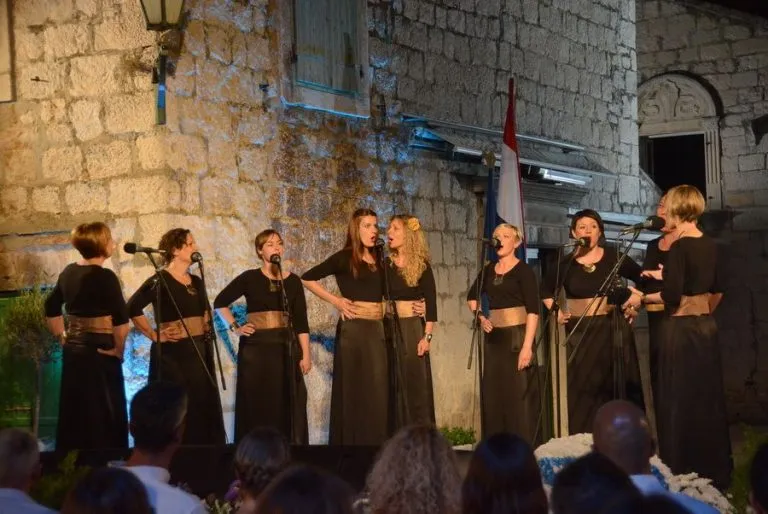
Benkovac was never supposed to become a music hub. There's no conservatory here, no major label satellite office, no industry infrastructure propping things up. What there is — and what's always been here — is a deep well of cultural tradition: klapa harmonies passed down through generations, the rhythmic stomp of traditional Dalmatian folk music, and a community that genuinely gathers around shared sound. That's the foundation everything else is being built on.
What's changed in the last several years is access. Affordable recording software, home studio setups that cost a fraction of what professional time used to run, and streaming platforms that don't care where you're located — all of that has allowed a generation of Benkovac artists to skip the gatekeeping entirely and go straight to the listener.
The result is a scene that feels genuinely unforced. Nobody here is chasing a trend. They're making what they know, and it turns out what they know is something a lot of people outside Croatia have never heard before.
Who's Making Noise
Walk through Benkovac on a weekend evening and you'll hear music spilling out of courtyards and community spaces in ways that feel more like a natural extension of daily life than a performance. But several artists have started translating that communal energy into recorded work that travels.
Local producer and multi-instrumentalist Davor K. — who records under the name Kamen Zvuk, roughly translating to "Stone Sound" — has been layering traditional Dalmatian melodic structures over sparse electronic production for the better part of three years. His releases on Bandcamp have drawn comparisons to artists like Balthazar and Ólafur Arnalds, though Davor himself is more likely to cite his grandfather's singing than any contemporary influence. His monthly listener count has climbed steadily without a single promotional push, purely through playlist discovery.
Then there's the four-piece group Ravnica, who play what they loosely call "Mediterranean post-rock" — long instrumental passages that build slowly, anchored by acoustic textures that feel distinctly regional. They recorded their debut EP in a converted stone outbuilding on the edge of town, and the room's natural reverb became a defining characteristic of the sound. American indie fans have been particularly responsive, with the EP landing on several community-curated Spotify playlists focused on international and "world" indie content.
Singer-songwriter Marta Blažević is perhaps the most immediately accessible of the bunch for American ears — her approach to songwriting is stripped-down and personal in ways that sit comfortably alongside artists like Phoebe Bridgers or Hand Habits, while her vocal phrasing carries an unmistakably Dalmatian cadence that sets her apart. She sings primarily in Croatian, which hasn't slowed the streaming numbers even slightly.
Geographic Isolation as Creative Fuel
It's worth pausing on something that seems counterintuitive: the very things that might make Benkovac seem like a tough place to build a music career are the same things giving its artists a distinct identity.
Distance from Zagreb's urban music infrastructure means nobody's here trying to sound like what's already working in the capital. The relative quiet of small-town life gives artists room to develop slowly, without the pressure of constant visibility. And the deep connection to place — to the landscape, to the cultural memory embedded in this part of Dalmatia — gives the music a specificity that global listeners find compelling precisely because it's not trying to be universal.
There's a concept in music criticism sometimes called "psychogeography" — the idea that where you are shapes what you make in ways that go beyond conscious choice. Benkovac is a living example of that. The music sounds like the town looks: a little weathered, deeply layered, more interesting the longer you spend with it.
Why American Listeners Are Paying Attention
The American indie music landscape has been dealing with a saturation problem for years. The barriers to releasing music dropped so dramatically that the sheer volume of content makes discovery feel overwhelming. In that environment, listeners are increasingly seeking out music that feels genuinely different — not different as a brand strategy, but different because it comes from somewhere real.
Croatian indie music, and Benkovac's corner of it specifically, fits that bill almost perfectly. It's not trying to replicate American or British indie conventions. It has its own melodic logic, its own relationship to rhythm and space, its own emotional register. For American listeners who've exhausted the domestic indie canon and started digging into international streaming, it hits like a discovery rather than a product.
Radio Benkovac has been part of that bridge — broadcasting local artists and weaving regional music into a stream that reaches well beyond the town's borders. It's a small platform doing something genuinely useful: connecting a place with a sound to an audience that didn't know it was looking for exactly this.
What Comes Next
None of the artists working in Benkovac right now are talking about leaving to make it somewhere bigger. That's telling. The infrastructure question — the practical concern about whether a small Dalmatian town can actually support a music scene long-term — is still a real one. But the attitude among the people making things here is that the town is the point, not an obstacle to get past.
If Benkovac's music scene continues to grow the way it has — organically, without industry scaffolding, powered by genuine listener discovery — it could represent something genuinely new: a regional scene that builds its international audience from the inside out, on its own terms, from a place that most people couldn't find on a map.
Somehow, that feels exactly right.