Old Walls, New Waves: How Benkovac's Ancient Stone Is Rewiring the American Ambient Music Scene
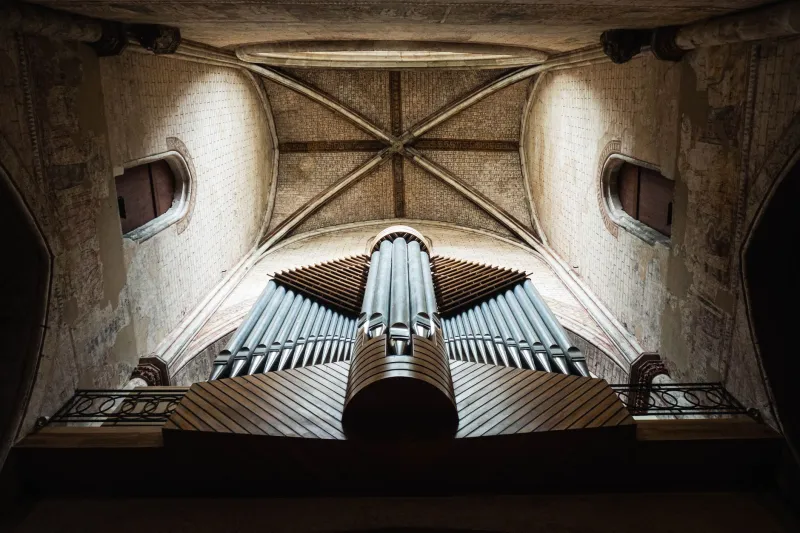
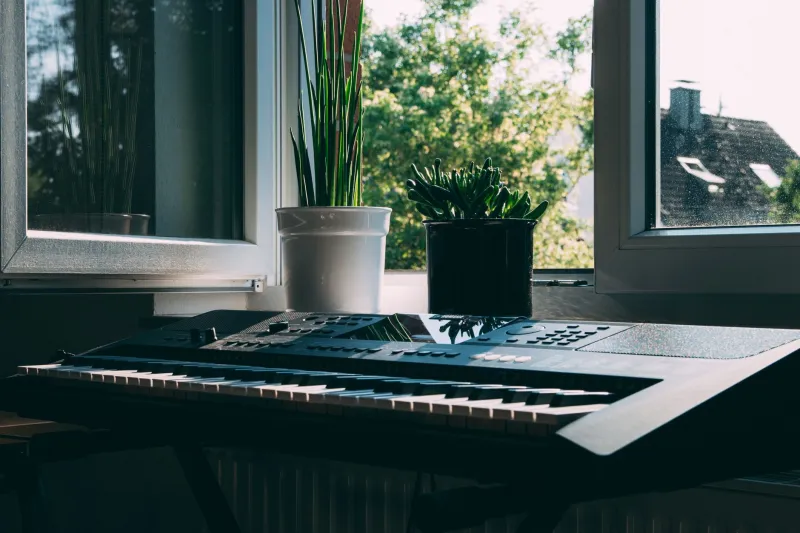
Somewhere between a $300 convolution reverb plugin and a crumbling medieval courtyard in the Dalmatian hinterland, a quiet revolution in sound design is taking shape. American ambient music producers — the kind who obsess over tail lengths, early reflections, and the ghost frequencies hiding beneath a drone — are increasingly making the trip to Benkovac, Croatia, and coming home with something no plugin library has ever handed them.
Call it the Benkovac Effect.
What Ancient Limestone Actually Does to Sound
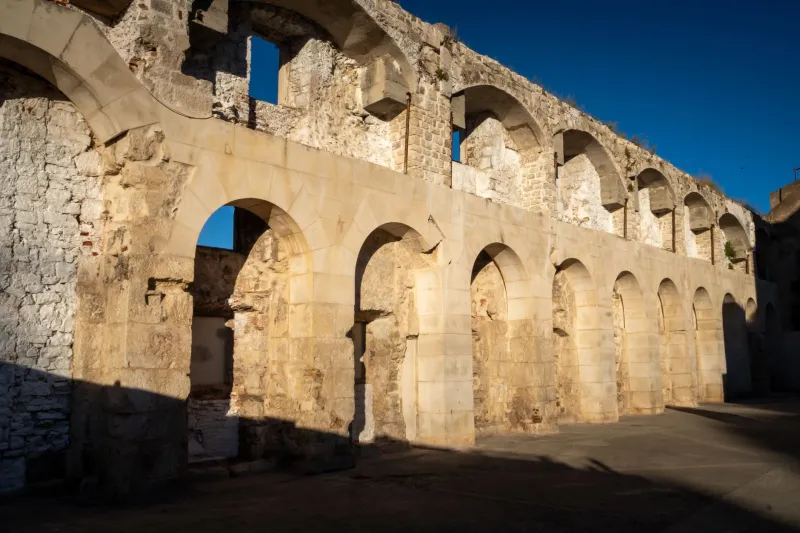
To understand why producers are showing up here with portable recorders and wide eyes, you have to understand what makes Benkovac's built environment so acoustically unusual. The town and its surrounding region are constructed largely from karst limestone — dense, irregular, and layered over centuries of human habitation. These aren't the smooth, predictable surfaces of a modern concert hall. They're porous in some places, brutally reflective in others, and shaped by generations of builders who had no acoustic engineers on speed dial.
What that produces, in practice, is a frequency response that's nearly impossible to fake. Low mids — roughly the 200 to 500 Hz range — bloom and sustain in ways that feel almost orchestral. High frequencies get softened and scattered rather than harshly reflected, which gives recordings made in these spaces a warmth that producers describe as "pre-aged," like the audio equivalent of well-worn denim. And the reverb tails? They don't decay cleanly. They dissolve, which is a very different thing.
For ambient composers working in lo-fi, drone, or experimental spaces, that distinction matters enormously. Clean reverb decay is easy to simulate. The messy, organic dissolve of sound in a centuries-old stone room is not.
The Plugin Problem Nobody Wants to Admit
Here's the uncomfortable truth that more producers are starting to say out loud: the best reverb plugins on the market are extraordinarily good at sounding like other recordings of spaces. They're impulse responses — snapshots of acoustic environments captured and replicated digitally. And they're useful. Nobody's throwing Valhalla in the trash.
But an impulse response is, by definition, a fixed moment. It doesn't breathe. It doesn't shift with temperature or humidity. It doesn't interact with the specific microphone you're using, the way you've positioned it, or the particular quality of silence in the room at 2 a.m. when the village has gone completely still.
Benkovac's stone spaces do all of those things. Producers who've recorded there talk about sessions that felt genuinely collaborative — like the building was participating. That might sound like creative mysticism, but it maps to something real: the acoustic behavior of irregular, aged stone is dynamic in ways that sampled environments simply can't reproduce.
A New Aesthetic Is Taking Shape
What's interesting from where we sit at Radio Benkovac is watching this translate into an actual movement on streaming platforms. There's a cluster of ambient and experimental releases over the past couple of years — some credited to artists who've passed through the region, others clearly influenced by the aesthetic even if recorded elsewhere — that share a particular sonic fingerprint. Warm, slightly diffuse low ends. Reverb that feels geological rather than digital. A sense of physical space that most bedroom productions, for all their technical polish, struggle to achieve.
Some producers are calling it "stone ambient." Others are filing it under lo-fi experimental or dark ambient. The genre tags are still being negotiated, but the sound is recognizable once you've heard it. It has weight. It has age. It sounds like somewhere specific rather than anywhere in general.
That specificity is increasingly a selling point. In a streaming environment where millions of tracks compete for the same playlist real estate, sounding like you were made in a particular place — a real place, with history and texture — is a form of differentiation that no amount of mixing finesse can manufacture.
What Producers Are Actually Doing Here
The workflow varies. Some artists come with a clear compositional framework and use Benkovac's spaces to add texture at the capture stage — recording room tones, acoustic impulses, and ambient field recordings that get layered back into productions assembled elsewhere. Others arrive with almost nothing and let the environment drive the creative process entirely.
A few have set up temporary residencies, renting space in older stone buildings and working for weeks at a stretch. The cost of living in the region compared to, say, Brooklyn or Los Angeles makes extended stays financially viable in a way that renting a high-end studio in the States simply isn't. You're not paying for the name on the door or the vintage gear in the rack. You're paying for quiet, space, and walls that have been doing interesting things to sound for several hundred years.
Local connections matter too. Radio Benkovac has been part of the conversation around regional music culture for years, and the community here is genuinely welcoming to artists who show up with curiosity rather than just a content agenda. The best sessions tend to happen when producers engage with the place — its rhythms, its food, its people — rather than treating it as a backdrop for content production.
The Frequency of Place
There's a broader idea underneath all of this that's worth sitting with. For most of recorded music history, producers chased neutrality — the perfectly treated room, the flat frequency response, the controlled environment that imposed nothing of itself on the recording. That was the professional standard.
What's shifting, at least in certain corners of ambient and experimental music, is an appetite for the opposite. For rooms that have opinions. For spaces that push back. For the acoustic character of a specific place at a specific moment — imperfect, unrepeatable, and entirely real.
Benkovac, with its medieval stone and its Dalmatian light and its particular brand of unhurried quiet, turns out to be very good at having opinions about sound. American producers are noticing. The releases coming out of this aesthetic movement are finding audiences on platforms that reward exactly this kind of sonic authenticity.
The walls here have been listening for centuries. Apparently, they have a lot to say.