No Signal, No Problem: Inside the 72-Hour Unplugged Sessions Changing How Artists Make Music
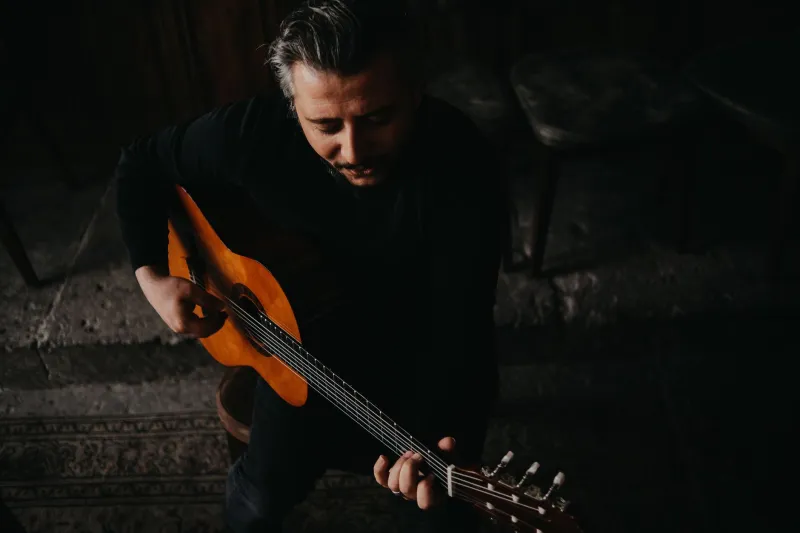
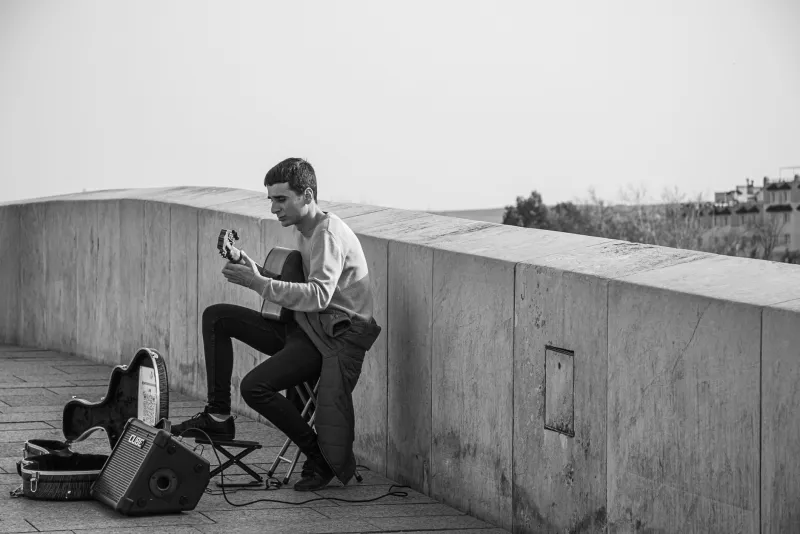
Somewhere in the hills outside Benkovac, in a stone house with thick walls and a courtyard that catches the afternoon light, a five-piece band from Nashville is on hour thirty-one of a self-imposed communications blackout. Their phones are in a locked box. Their laptops are closed. Nobody is checking their streams, their comments, their DMs, or their label's Slack channel. They're just playing.
This is becoming a thing.
Over the past couple of years, a specific type of creative retreat has taken root in and around Benkovac — one defined less by what's present than by what's been deliberately removed. Artists, producers, and creative teams are traveling to this corner of Dalmatia not for its studio equipment or its industry connections, but for something far more fundamental: the chance to work without the internet telling them what to do next.
The Problem That Benkovac Is Solving
Ask any working musician in 2025 what the hardest part of making music is, and most of them won't say "writing" or "recording." They'll say "the noise." The constant stream of analytics, social media obligations, fan expectations, label feedback, playlist algorithm updates, and comparative data that floods every creative decision before, during, and after the making of it.
"I would literally be in the middle of recording a vocal take and feel my phone buzz and lose the thread of what I was doing," says Keely Marsh, a singer-songwriter from Portland who spent four days in Benkovac last fall as part of a small group session. "And even when I put the phone face-down, I was still thinking about it. I was making music and managing my presence simultaneously, all the time. I didn't even realize how exhausted that was making me until I stopped."
The 72-hour framework — which has become something of an informal standard among artists who've done these sessions, though some go longer — was developed not by a wellness consultant or a music therapist but through trial and error among a loose network of artists who started sharing notes about their Benkovac experiences.
The number matters. The first day, most participants describe as uncomfortable. The compulsion to check in, to document, to post, to respond is strong and the absence of it feels like withdrawal — because, neurologically speaking, it is. By the second day, something shifts. By the third, most artists describe entering a creative state they haven't accessed in years.
What the Research Actually Says
The creative benefits of disconnection aren't just anecdotal. Cognitive science research has consistently shown that the kind of deep, associative thinking required for genuine creative work — the type that produces original ideas rather than recombinations of recently consumed content — requires extended periods of unfocused attention. Smartphones, with their infinite scroll and notification architectures, are specifically designed to prevent exactly that.
Add to this the particular pressure of creating in public, which is now essentially unavoidable for any artist with a social media presence. Studies on performance and creativity suggest that external evaluation — even the anticipation of external evaluation — measurably inhibits creative risk-taking. When you know everything you make might immediately be scrutinized, you make safer things.
Benkovac's stone walls can't fix the internet. But they can hold the internet at bay for long enough to matter.
The Sessions Themselves
The format varies, but the core elements are consistent. Phones and internet-connected devices are surrendered at the start — sometimes to a designated "keeper," sometimes literally locked away. There's no formal schedule. Meals are communal and unhurried, often prepared with local ingredients from the surrounding area. Sessions happen when they happen, not when a calendar says they should.
The acoustic properties of Benkovac's stone architecture play a genuine role. Musicians describe the natural reverb of the town's buildings and courtyards as a kind of collaborator — one that responds to what you're playing and pushes you toward different choices than you'd make in a treated studio environment. Several artists have noted that they ended up in keys or tempos they'd never normally choose because the room seemed to prefer them.
Jordan Fitch, a producer from Brooklyn who facilitated a group session for four artists last summer, describes the creative output as qualitatively different from anything he'd worked on in a conventional studio context. "The songs that came out of those three days had a looseness to them. Not sloppiness — looseness. Like the ideas hadn't been over-handled. Usually by the time something gets to me, it's been through so many filters — the artist's own self-censorship, feedback from their manager, what they think their audience wants — that I'm working with something pre-shaped. In Benkovac, stuff was coming out raw. It was exciting in a way that producing hadn't been for me in a while."
Mental Health as a Creative Input
Artists who've completed 72-hour sessions in Benkovac are increasingly vocal about the mental health dimension — not as a separate benefit, but as directly connected to the quality of what they create.
Anxiety, depression, and burnout are endemic in the music industry, and the always-on nature of modern artist careers is a well-documented contributing factor. Several participants in Benkovac sessions described arriving in states of creative paralysis — unable to finish songs, unable to feel enthusiasm for projects they'd previously loved — and leaving with both a renewed capacity for work and a clearer sense of why they'd started making music in the first place.
"I'd forgotten what it felt like to make something that nobody was going to see," says one artist who asked to remain anonymous. "Everything I'd made for two years was made for an audience, before the audience even existed. In Benkovac I made something just because it felt right. That sounds small but it was the most important thing that happened to my career in years."
The Paradox of Disconnection in a Connected Industry
There's an obvious tension in the fact that artists are traveling to a remote Croatian town to escape the connectivity that their careers depend on. Nobody is arguing that Benkovac is a permanent solution or that the modern music industry's digital infrastructure can simply be opted out of.
But the 72-hour sessions aren't about rejection. They're about recalibration. Artists come back to their phones, their socials, their labels, and their streaming dashboards — but they come back having made something that didn't get shaped by those forces before it had a chance to breathe.
Here at Radio Benkovac, we've watched this trend develop from the inside, and what strikes us most isn't the technology angle. It's the older story underneath it: that Benkovac has always been a place where things slow down enough for people to hear themselves think. The stone walls have been doing that for centuries. They're just doing it for a new kind of traveler now.