Pass the Pršut: How Benkovac's Dinner Tables Became Music Industry Neutral Ground
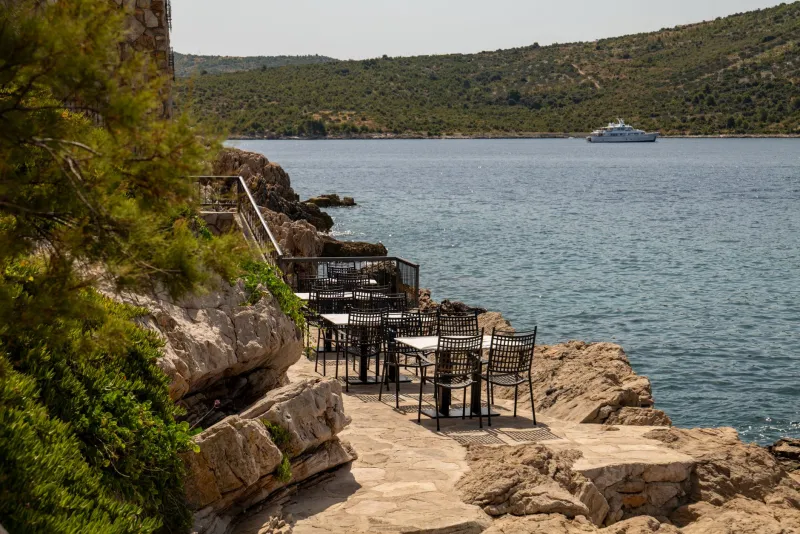
When two rival label executives needed to settle a dispute that had been festering for eighteen months, their mutual attorney suggested somewhere unusual: a farmhouse dining table in Benkovac, Croatia. Three bottles of local wine and a plate of slow-roasted lamb later, they had a deal. That story is becoming less surprising by the month.
Benkovac has quietly developed a reputation in certain corners of the music industry as the place you go when Los Angeles and New York have made everything worse. Away from the posturing of Sunset Strip dinners and the transactional tension of Manhattan power lunches, something different seems to happen at Dalmatian tables. People talk. They listen. They eat slowly and they drink well and somewhere between the appetizers and the dessert, problems that seemed intractable start looking solvable.
Why Geography Matters More Than You'd Think
Industry insiders who've brokered meetings in Benkovac describe the location as doing psychological work that no conference room can replicate. There's no home-court advantage. Nobody has their assistant two doors down or their lawyer on speed dial in the parking garage. The physical distance from both coasts creates what one entertainment attorney — who asked not to be named because several of her clients are involved — called "a kind of enforced perspective."
"When you're in LA or New York, everything feels urgent because everything around you is signaling urgency," she explained. "You're in a city that runs on deals and ego and momentum. In Benkovac, you're eating cheese that was made three miles away and drinking wine from grapes grown on a hillside you can literally see from the window. The scale shifts. Your problem starts to feel like what it actually is — a problem between two people who both want something — rather than some massive industry-defining conflict."
The neutrality isn't just psychological. Benkovac belongs to neither camp. It has no music industry infrastructure, no trade publication offices, no label headquarters. Nobody's territory, nobody's turf.
The Deals That Happened Here
Specifics are hard to come by — the music industry doesn't exactly issue press releases about settlements — but enough details have filtered through the industry grapevine to sketch a picture.
In one widely discussed case, a dispute between a streaming platform and an independent distributor over royalty accounting methodology had been grinding through arbitration for over a year. A senior executive at the distributor suggested Benkovac after a personal trip the previous summer. Both sides agreed, flew to Split, drove north into the Dalmatian hinterland, and spent two days at a rented property outside town. The arbitration was dropped within a week of their return.
In another instance, a producer and a major label were at an impasse over creative control for a high-profile album project. The producer had heard about Benkovac through a musician friend who'd recorded there. He proposed it as a location for what he called a "reset conversation." The label's A&R head flew over skeptically. They ended up spending an afternoon at a konoba — a traditional Dalmatian tavern — working through a revised contract framework over plates of grilled fish and roasted vegetables. The album eventually came out. It debuted at number four.
The Food Is Doing Real Work Here
It would be easy to dismiss the culinary dimension as incidental, but people who've participated in these meetings consistently bring it up without prompting. Dalmatian food culture is fundamentally communal and unhurried. Meals aren't events you schedule between meetings. They are the meeting.
The local tradition of sharing dishes — pršut (a dry-cured ham similar to prosciutto but with its own distinct character), fresh-caught fish, slow-cooked lamb with potatoes, local cheeses, hand-picked olives — creates a physical and social rhythm that's almost impossible to rush. You're passing things across the table. You're waiting for dishes to arrive. You're refilling each other's glasses.
"There's something about the act of sharing food that changes the dynamic," says one music business manager who facilitated a partnership negotiation in Benkovac last year. "You can't really be adversarial with someone you've just handed a plate to. It sounds corny but it's genuinely true. The table does something."
Local restaurant owners and konoba hosts in the Benkovac area have noticed the uptick in what they describe as "serious American visitors" — people who arrive in small groups, eat at long tables, talk quietly for hours, and tip extremely well. One proprietor noted, with some amusement, that she doesn't know what they're discussing but they always seem to leave in better moods than they arrived.
The Absence of Performance
Industry observers who study negotiation dynamics point to another factor: the removal of audience. In Los Angeles or New York, even private dinners carry a performative dimension. You might be seen by someone. Your assistant knows where you are. The whole ecosystem of the industry is watching, even when it isn't.
In Benkovac, nobody knows who you are. The server at the konoba doesn't care that you run a major label. The farmer selling cheese at the morning market isn't impressed by your streaming numbers. That anonymity, counterintuitively, seems to free people up to be more direct and more honest than they'd be in a context where reputation management is always running in the background.
"I said things at that table that I would never have said in a boardroom," one executive told us, speaking about a partnership discussion that eventually led to a significant joint venture. "Not because they were inappropriate — they were just honest. And I think both of us were more honest because there was nothing to perform for."
Benkovac Isn't Selling Itself as a Deal Hub
What's interesting is that the town itself isn't marketing this. There's no "music industry retreat package" being promoted by the local tourism board. The meetings happen because word spreads quietly, through the industry's own informal networks, from one person who had a productive experience to another who needs one.
That organic quality is probably part of what makes it work. The moment Benkovac starts trying to be a neutral-ground destination, it stops being one. For now, it's just a place where the food is good, the wine is honest, and two people who need to figure something out can sit across a table without the rest of the industry watching.