Why Therapists and Burnout Coaches Are Sending Their Most Stressed Clients to a Croatian Fortress Town
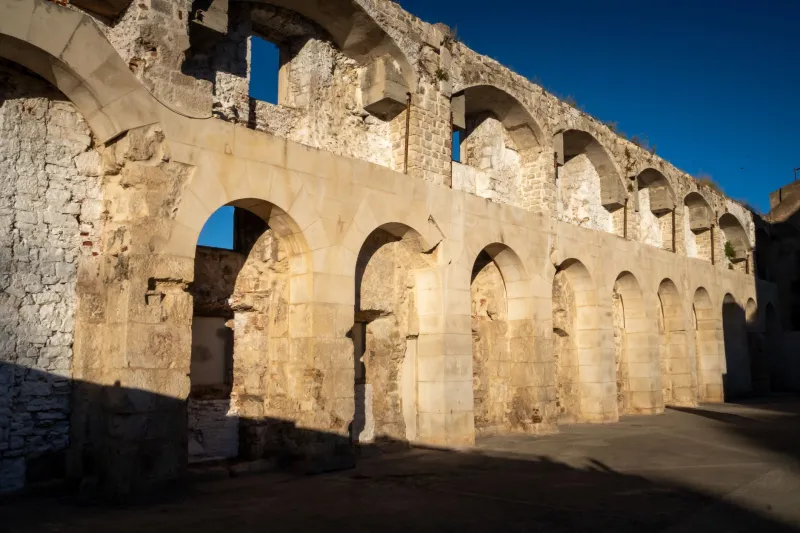
There's a moment that Dr. Renata Ostrowski, a Chicago-based burnout researcher, describes as "the exhale." It happened on her second afternoon in Benkovac, sitting on a low stone wall near the old fortress, with nothing but wind, distant goat bells, and the faint hum of Radio Benkovac drifting from an open window somewhere down the lane. "I've done retreats in Sedona. I've done silent meditation in Vermont," she says. "Nothing hit me the way that afternoon did. My nervous system just... let go."
She's not alone. Quietly, almost without announcement, Benkovac has been accumulating a devoted following among American therapists, trauma-informed coaches, and digital detox advocates. They're not here for the beaches — that's Split's job. They're here for something harder to name but increasingly impossible to ignore: a particular quality of stillness that the town seems to produce almost effortlessly.
What Makes a Place Therapeutic?
The academic term is "restorative environment," and environmental psychologists have spent decades trying to pin down exactly what makes certain spaces heal the mind while others grind it down. The usual checklist includes natural elements, low sensory overload, a sense of being "away," and what researchers call "soft fascination" — the gentle pull of a landscape that engages attention without demanding it.
Benkovac checks every box, and then adds a few that researchers hadn't thought to include.
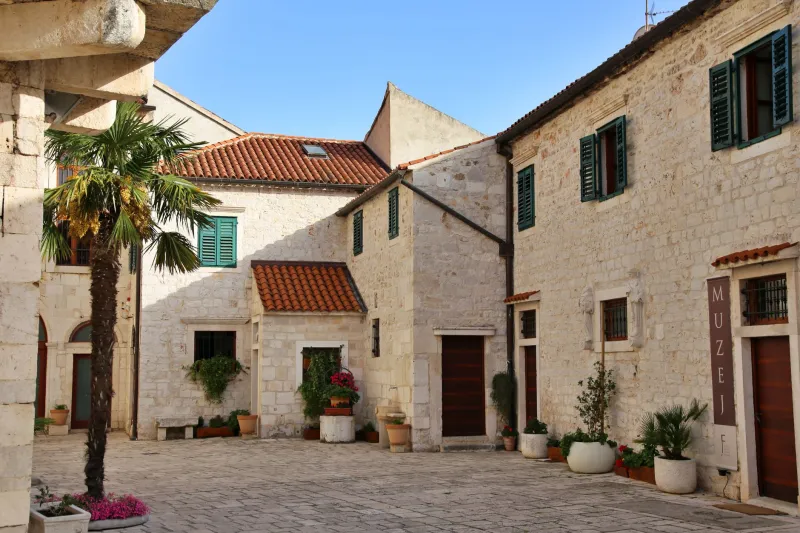
The town's ancient stone architecture — karst limestone that has absorbed centuries of wind and silence — creates an acoustic environment that audio therapists find genuinely unusual. Sound doesn't bounce aggressively here. It softens, rounds, and settles. Music played in Benkovac's older spaces carries a natural warmth that recording engineers have been quietly obsessing over for years. But for mental health professionals, the implications go further. "Harsh acoustic environments are genuinely stressful on the body," explains Marcus Webb, a Nashville-based sound therapist who visited Benkovac last spring. "Hard glass, concrete, open-plan offices — they keep your fight-or-flight system slightly activated all day. Benkovac's stone interiors do the opposite. They're like a neurological permission slip to calm down."
The Digital Silence Factor
It would be misleading to call Benkovac a digital dead zone — the town has internet, and Radio Benkovac has been streaming its mix of local music, Dalmatian folk, and contemporary Croatian sounds to listeners worldwide for years. But the texture of digital life here is different from what most Americans experience.
There's no algorithmic pressure. No notification storm. No social media event happening three blocks away that you're supposedly missing. The town doesn't perform itself for Instagram the way coastal Croatian destinations have learned to do. It just exists, on its own terms, in its own rhythm.
For clients coming out of high-stress professional environments — tech executives, emergency physicians, attorneys running on cortisol and caffeine — that absence of performance pressure turns out to be profoundly disorienting in the best possible way. "My client described it as 'the first place I've been in ten years where I didn't feel like I was supposed to be doing something,'" says Dr. Ostrowski. "That's enormous. That's the whole problem we're trying to solve in burnout recovery, and this town solves it environmentally, without any intervention at all."
Music as the Invisible Therapist
Here's where Benkovac's cultural identity becomes clinically interesting. The town has a living music culture that isn't curated for tourists. Local musicians play in small gatherings. Traditional Dalmatian klapa — the close-harmony vocal style that UNESCO has recognized as an intangible cultural heritage — floats out of courtyards on warm evenings. Radio Benkovac provides a sonic backdrop that feels organic rather than programmed.
For music therapists, this matters enormously. Passive music exposure — simply being in an environment where music exists naturally, without headphones, without a playlist, without intention — has been shown to reduce cortisol levels and support emotional regulation. "There's something about music you didn't choose that's particularly therapeutic," says Webb. "It bypasses the ego. You're not managing your mood with it. It's just there, and your nervous system responds."
He now recommends that certain clients spend at least a week in Benkovac before beginning intensive therapy work. "I want their baseline stress level to drop before we start. The town does that work for me."
The Community Effect
Benkovac is not a resort. It doesn't cater to visitors in the way that purpose-built wellness destinations do. And paradoxically, that's part of what makes it work.
The town has a genuine, functioning community — people who know each other, who share food, who sit outside in the evenings for no particular reason other than that it's a pleasant thing to do. For Americans who have spent years in atomized urban or suburban environments, the casual social density of a small Dalmatian town can be quietly revelatory.
"We talk a lot about loneliness as a public health crisis," says Dr. Ostrowski. "And then you sit in a square in Benkovac where three generations of a family are having coffee together on a Tuesday afternoon, and you think — oh. This is what we've lost. And being around it, even as an outsider, has an effect."
Social neuroscience backs this up. Co-regulation — the process by which our nervous systems synchronize with and are calmed by other regulated nervous systems — doesn't require deep personal connection. Simply being in proximity to a calm, socially cohesive community has measurable effects on stress biomarkers.
A Quiet Prescription
None of this is officially organized. There's no Benkovac Wellness Institute. No retreat center charging $4,000 a week for the privilege of sitting near old walls. The therapists and coaches who've discovered it tend to share the information carefully, almost reluctantly — the way people share a great restaurant before it gets crowded.
But word is spreading. A small number of American mental health professionals have begun building informal referral networks around extended stays in the region, often combining a week or two in Benkovac with broader Dalmatian travel. Some are exploring partnerships with local hosts to create low-key, unbranded recovery experiences that preserve exactly what makes the place work: the absence of programming, the presence of genuine life.
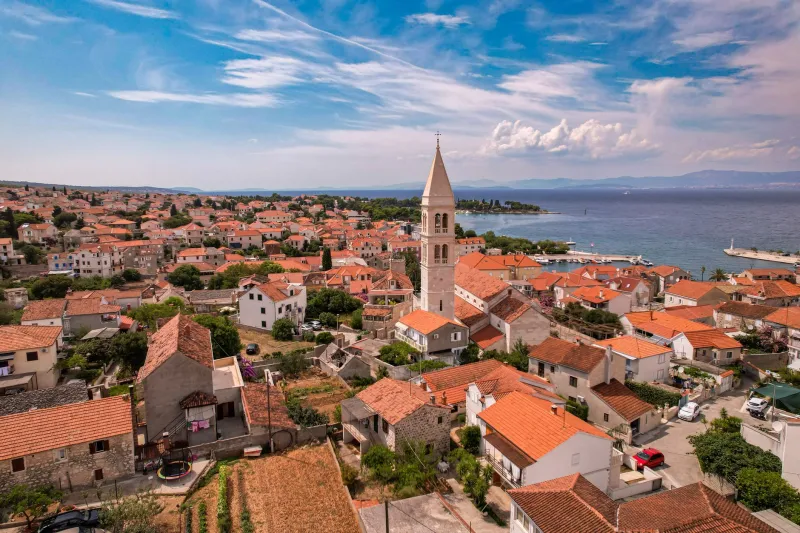
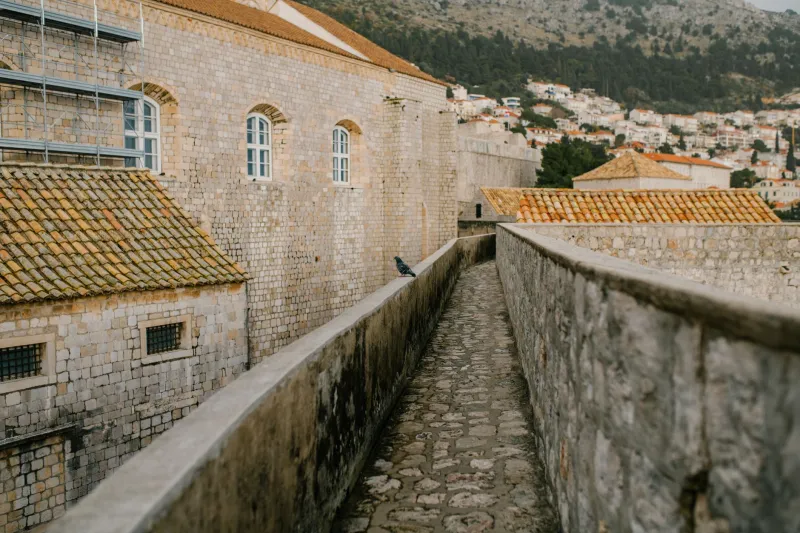
For now, Benkovac remains largely itself — a medieval fortress town broadcasting music and stories from the Dalmatian heartland, indifferent to its own emerging reputation as one of the most unexpectedly healing places in Europe.
Which, if you ask the therapists who've been there, is precisely the point.
Tune into Radio Benkovac online to catch a taste of the Dalmatian soundscape that's quietly capturing American hearts — and calming American nervous systems.