Pit Stop in Dalmatia: How Touring Artists Are Using Benkovac as a Secret Weapon Between US Dates

Photo by Photo by Denis Gorbuleac on Unsplash on Unsplash
There's a particular kind of exhaustion that only touring musicians understand. It's not just physical — it's the slow erosion of creative instinct that happens somewhere between the fourteenth soundcheck and the twenty-second hotel room that looks exactly like the last one. Tour managers have a name for it. Producers have a name for it. The artists themselves usually just call it "losing the thread."
What nobody expected was that a small town in the Dalmatian hinterland would become one of the most effective antidotes to that problem.
Benkovac — population modest, stone walls ancient, Wi-Fi surprisingly decent — has quietly become a go-to layover for a specific kind of touring musician: the kind who's serious enough about their craft to treat a week off as a working investment rather than a vacation. And Radio Benkovac has been watching this shift happen in real time.
The Logistics Actually Make Sense
Here's something that surprises most people when they first hear about this trend: the geography works. A lot of North American touring schedules include a natural gap between a US leg and either a European run or a return to the studio. Flights from major East Coast cities to Split or Zadar are increasingly direct or single-connection, and from either of those coastal airports, Benkovac is under an hour by car.
For artists who'd otherwise be stuck killing time in a city they've already played twice this year, the math starts to look interesting fast.
"I had ten days between the last Chicago date and when we were supposed to start pre-production in London," says one indie rock vocalist who asked to stay anonymous because their label hadn't officially announced the residency. "My manager suggested Lisbon. I'd already done Lisbon. Someone in our crew had been to Benkovac and just kept talking about it. We booked it kind of impulsively and it turned out to be the best professional decision I made that entire cycle."
What Benkovac Actually Offers That Nowhere Else Does
Ask anyone who's spent creative time in Benkovac what makes it different, and they'll usually pause before answering. It's not a simple pitch.
The town sits in the Ravni Kotari region, a plateau of limestone karst that stretches between the coast and the Dinaric Alps. The landscape is stark in a way that feels clarifying rather than empty. There's a medieval fortress. There are stone houses that have absorbed centuries of weather. There's a local food culture built around lamb, olive oil, and a kind of patient, unhurried approach to the table that tends to slow people down whether they want to be slowed down or not.
For musicians who've been running at arena pace for months, that enforced deceleration turns out to be exactly what the creative process needs.
Jakob, a producer who has worked with several mid-size European touring acts and one major-label US artist he's not at liberty to name, puts it plainly: "The silence here is different. In a city, even when it's quiet, there's ambient pressure. You feel like you should be doing something. In Benkovac, the silence is just silence. Your brain starts filling it with music instead of logistics."
The Residency Scene Is Small but Real
Benkovac doesn't have a traditional music residency infrastructure — no purpose-built artist retreat with a glossy website and a waiting list. What it has is something more organic: a network of local venue operators, guesthouse owners, and musicians who've figured out how to accommodate working artists with actual needs.
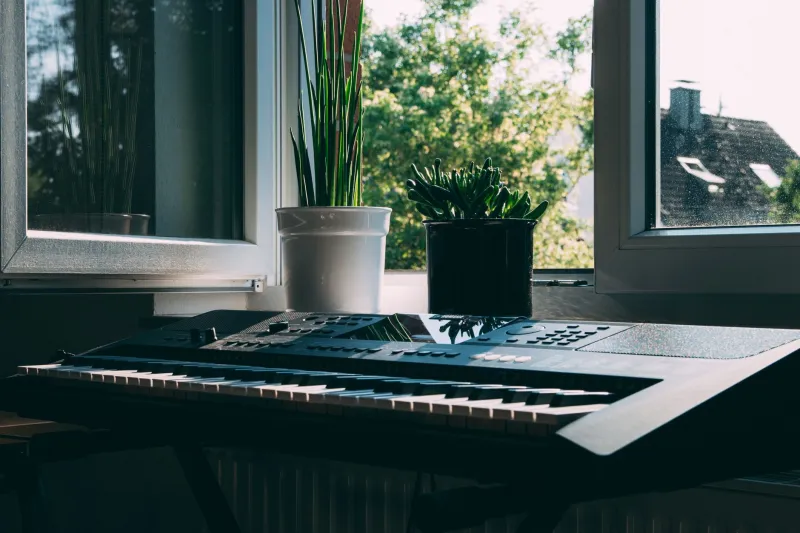
Marija, who runs a guesthouse on the edge of the old town, started getting inquiries from international musicians about three years ago and has since adapted two of her rooms to accommodate basic recording setups. "They don't need a full studio," she says. "They need a quiet room, good acoustics, a table big enough for a laptop and an interface, and food that doesn't come from a hotel buffet. That we can do."
Several local venues — including a stone-walled space that Radio Benkovac has featured before — have started hosting low-key acoustic sets from artists in residence. These aren't promotional events. They're more like musical conversations, often announced only a day or two in advance through local channels. The audiences tend to be small, engaged, and genuinely curious rather than there to capture content for social media.
For artists who've been performing for crowds of thousands, playing for a room of forty people in a building that's been standing since the fifteenth century does something to the ego that turns out to be deeply productive.
Burnout Prevention as Professional Strategy
The music industry has started taking burnout seriously in a way it historically hasn't. Tour managers are increasingly being trained to flag warning signs. Labels are building mandatory rest periods into contracts. And artists themselves are getting more vocal about the fact that running yourself into the ground doesn't actually produce better work — it just produces more of it until it stops producing anything at all.
Benkovac fits neatly into this new framework, but with an important distinction: the artists coming here aren't coming to do nothing. They're coming to do something different.
"I wrote more usable material in six days here than I had in the previous four months on the road," says a singer-songwriter who toured the US extensively last year and built a Benkovac stop into their schedule after hearing about it from another artist. "I wasn't resting. I was working. But I was working without the noise, and the noise is apparently where most of my worst decisions live."
That's the thing about Benkovac that doesn't fit neatly into a press release: it's not a spa retreat. It's not a digital detox camp. It's just a place where the conditions happen to be unusually good for thinking clearly, and thinking clearly turns out to be most of what making good music actually requires.
Radio Benkovac's Take
We've been covering the Benkovac music scene for a while now, and we'll be honest — this particular trend still catches us a little off guard. Not because it's surprising that artists find value here, but because of how quietly it's grown. There are no press releases. No sponsored content. No influencer campaigns. Just musicians telling other musicians, tour manager to tour manager, that this specific place in the Dalmatian interior is worth the detour.
That's as genuine an endorsement as the music industry is capable of producing.
If you're a touring artist reading this and wondering whether it's worth the logistics: the people who've come here say yes, consistently and without hesitation. The people who run this town's venues and guesthouses are ready for you. And the stone walls — which have heard a lot of things over a lot of centuries — are ready to hear whatever you've got.
Just maybe leave the tour bus at home.