Why Silicon Valley's Sharpest Minds Are Rebooting Their Brains in a Croatian Stone Village
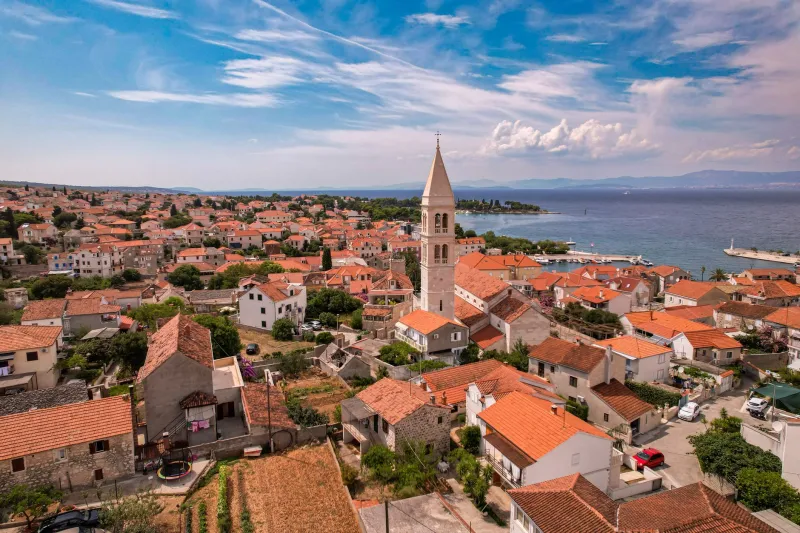
Marcus Webb didn't go to Benkovac to have a breakthrough. He went because he was burned out, behind on a product launch, and his therapist had told him — in so many words — that if he didn't unplug, his body was going to do it for him. He booked a cheap flight to Split, rented a car, drove forty minutes inland, and ended up in a small Dalmatian town that most of his San Francisco colleagues had never heard of.
Six weeks later, he came back with the clearest product vision of his career.
"I'm not being dramatic when I say Benkovac changed the way I think," says Webb, co-founder of a mid-sized UX design studio based in Oakland. "I went there to rest. I came back ready to build something I'd been too cluttered to see."
He's not alone. Quietly, over the past few years, a loose but growing network of American tech workers, startup founders, and creative directors has been making the same pilgrimage — to a town most people couldn't find on a map, tucked into the karst landscape of the Dalmatian hinterland. And what they're finding there is something that no productivity app, no co-working space, and no executive retreat has been able to replicate: genuine mental stillness.
Your Brain on Hustle Culture (Spoiler: It's Not Great)
Before we get into what makes Benkovac specifically interesting, it helps to understand what constant digital stimulation actually does to creative cognition. Neuroscientists have been ringing this alarm for over a decade. The human brain's default mode network — the part responsible for imagination, problem-solving, and connecting disparate ideas — needs genuine downtime to activate. Not scroll-through-Instagram downtime. Not podcast-while-commuting downtime. Actual, low-stimulation, let-your-mind-wander downtime.
The problem is that modern tech culture treats boredom like a character flaw. Every gap in the day gets filled. Every quiet moment gets monetized. And the result, according to researchers at institutions from Stanford to the University of Southern California, is a kind of creative constipation — people who are incredibly busy but increasingly unable to generate genuinely novel ideas.
Benkovac, almost by accident, is the antidote.
What Makes a Town Feel Like a Reset Button
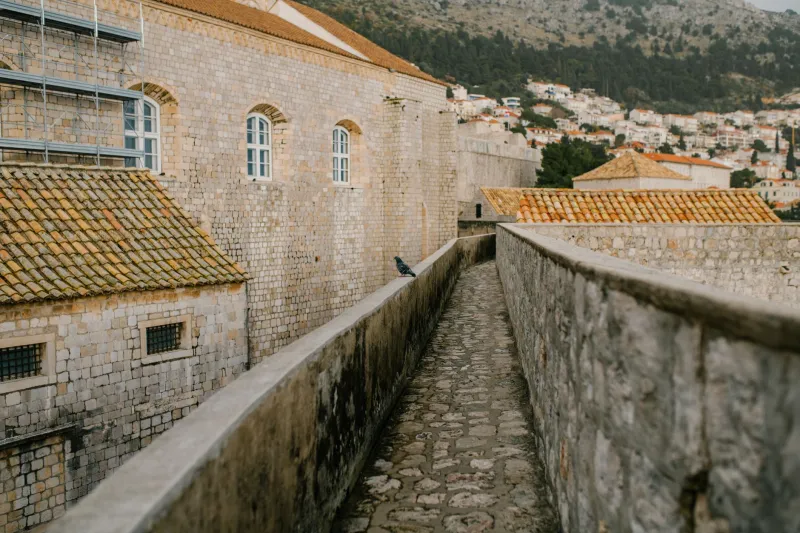
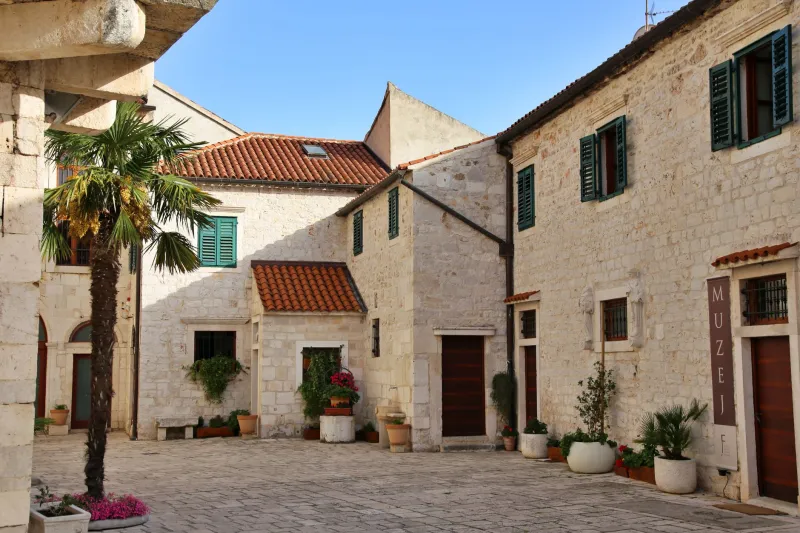
It's not just that Benkovac is quiet, though it is. It's that the quiet there has texture. The town sits in a region that has been continuously inhabited for thousands of years — Illyrian hill forts, Roman roads, medieval fortresses, and Ottoman-era architecture all exist within a few kilometers of each other. There's a weight to the place. A sense that time moves differently here, and has for a very long time.
Jasmine Okafor, a product designer from Austin who spent two months in the region last spring, describes walking through the old town center and feeling what she calls "perspective vertigo."
"You're standing next to a wall that's been standing since before the United States existed as a concept," she says. "That does something to you psychologically. Your startup's Q3 roadmap suddenly feels a little less like the most important thing in the universe."
That cognitive reframing — the involuntary shrinking of your own immediate concerns against a backdrop of deep historical time — is something psychologists refer to as "awe." And research published in journals like Psychological Science has consistently linked the experience of awe to increased creativity, reduced self-referential thinking, and a greater capacity for what's called "big-picture cognition."
Benkovac delivers awe at a walking pace, and without charging a retreat fee.
The Community Factor Nobody Talks About
Here's the part that surprises most people who go there expecting a solitary detox: Benkovac is genuinely social. Not in a curated, networking-event kind of way — in the way that small towns everywhere used to be before everyone retreated into their devices. People talk to each other. Neighbors know each other. The local market isn't just a transaction; it's a conversation.
For people who've spent years operating in the performative social environments of tech hubs — where every interaction carries the subtext of who you know and what you're building — the uncomplicated human contact of a small Croatian town can be disorienting at first, and then deeply restorative.
Dan Kowalczyk, a startup founder from Chicago who spent three weeks in the Benkovac area while working through a pivot decision, says the social dynamic was as important as the silence.
"I was having dinner with a local family, barely speaking each other's language, and somehow in the middle of that conversation I figured out what my company actually needed to do," he says. "I think it's because I wasn't performing. I wasn't trying to impress anyone. I was just... present. And when you're actually present, your brain starts working again."
Radio Benkovac's Take: This Isn't a Trend. It's a Correction.
From where we sit — broadcasting out of the Dalmatian heartland, watching the world discover what we've always known about this region — the influx of creative professionals doesn't feel like a trend. It feels like a correction.
For decades, the cultural narrative pushed people toward density and stimulation. Bigger cities, faster networks, more input. And for a while, that formula worked. But there's growing evidence — both scientific and anecdotal — that the formula has hit a wall. The people generating the most interesting ideas right now aren't always the ones in the most connected environments. Sometimes they're the ones who had the courage to disconnect, even briefly, and let their minds remember how to roam.
Benkovac didn't engineer this. It didn't build a brand around it or launch a marketing campaign targeting burned-out tech workers. It just kept being itself — ancient, unhurried, honest — and waited for the world to need what it had always offered.
So What Do You Actually Do There?
For Americans used to structured itineraries, this is often the first question. And the honest answer is: less than you think, and more than you'd expect.
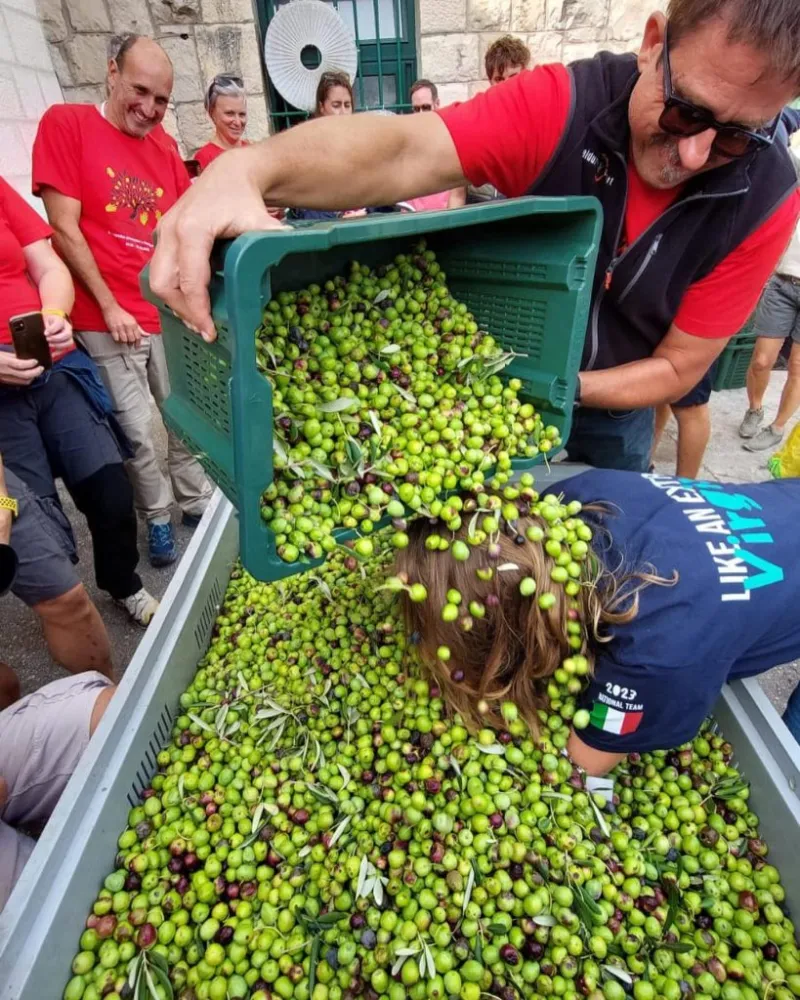
You walk. You eat well — lamb, olive oil, local cheese, wine from the Šibenik-Knin region. You visit the Benkovac fortress and try to wrap your head around the layers of civilization stacked on top of each other. You drive out to the Krka or Zrmanja rivers and sit by moving water for longer than feels productive. You talk to people at the local café even when you don't share a language. You sleep without an alarm.
And somewhere in the middle of all that apparent inactivity, your brain quietly does what brains are actually designed to do: it integrates, synthesizes, and eventually produces something new.
Marcus Webb, the Oakland designer we spoke with at the start, put it simply: "The best thing Benkovac gave me wasn't inspiration. It was space. And space, it turns out, is the one resource Silicon Valley has completely run out of."
He's already planning to go back.