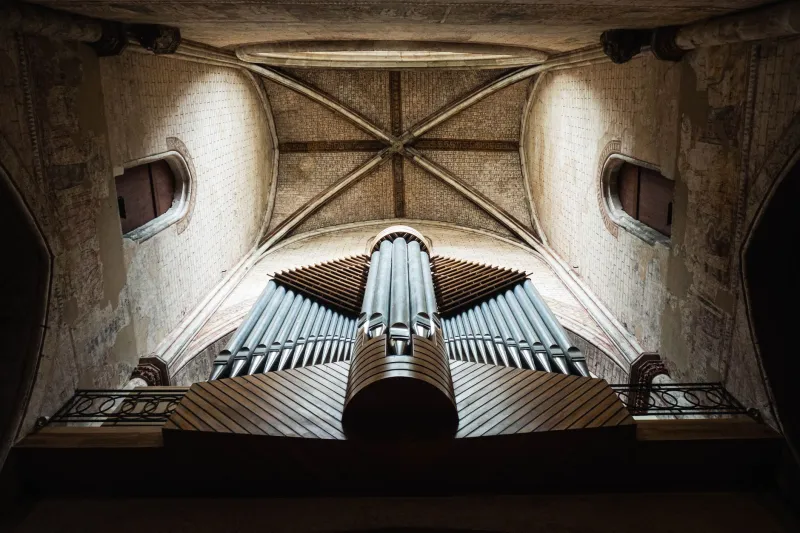
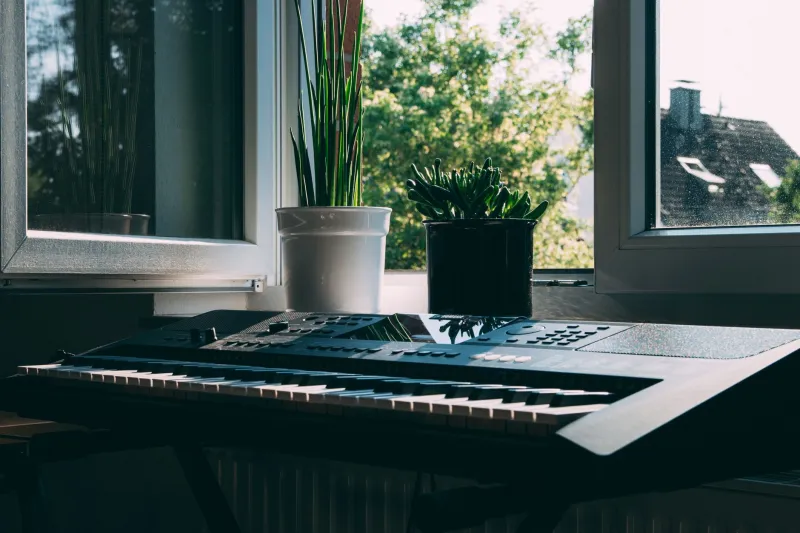
When the Conservatory Isn't Enough: Classical Musicians Are Fleeing to a Croatian Stone Town to Find Their Sound Again
There's a particular kind of burnout that doesn't come from laziness. It comes from too much — too many auditions, too many master classes, too many rooms full of people competing for the same twelve chairs in the same four orchestras. It's the burnout that hits you in the middle of a Brahms sonata and makes you wonder if you actually love this thing at all anymore.
For a growing number of American classical musicians, the answer to that question has been surprisingly geographic. Specifically: Benkovac, Croatia.
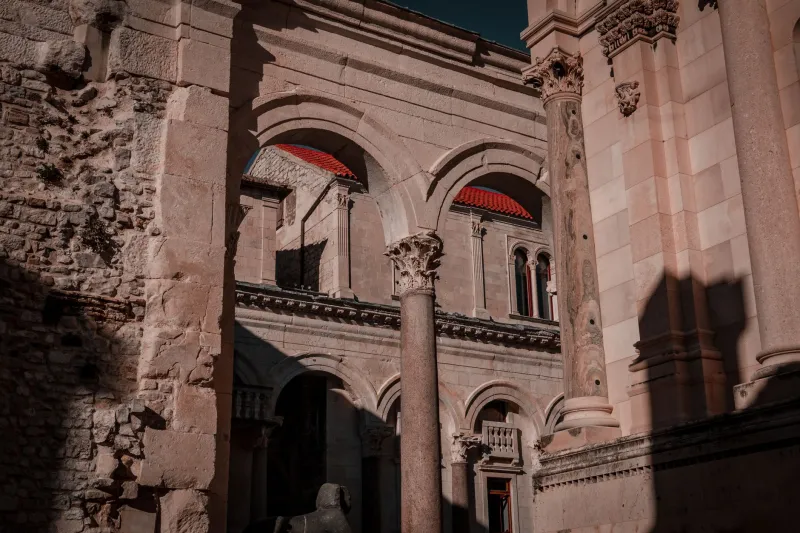
You wouldn't necessarily find it on a list of classical music destinations. It doesn't have an opera house. There's no internationally recognized summer festival with a waiting list and a $400 application fee. What it has instead is stone — centuries-old monastery walls, fortress chambers, and medieval architecture so acoustically alive that trained musicians describe playing inside them as something closer to a religious experience than a rehearsal.
And increasingly, that's exactly what they're looking for.
The Problem with Perfect Rooms
Ask any conservatory-trained musician about their practice environment and they'll describe something engineered to within an inch of its life. Acoustically treated walls. Controlled reverb. Rooms designed to make every note sound clean, precise, and — if we're being honest — kind of sterile.
That precision is the point, of course. When you're preparing for a Carnegie Hall audition or a Juilliard jury, you need to hear exactly what you're doing wrong. The room can't lie to you.
But some musicians argue that rooms that can't lie also can't inspire. After years of playing in environments optimized for critique, the music starts to feel like a technical exercise rather than an artistic act.
"I could play my Bartók concerto perfectly in a practice room," says one violinist who studied at a top-ten US conservatory before making her first trip to Benkovac two summers ago. "And I hated every note of it. There was nothing left to discover. The room had already told me everything the room was going to tell me."
What she found inside a stone chamber near Benkovac's old town center was the opposite of that. The walls, she says, respond to you. They have opinions. They push back. They reward certain kinds of phrasing and punish others in ways that no acoustic panel ever could.
What Stone Actually Does to Sound
This isn't just musicians waxing poetic. There's real acoustic science behind why ancient stone structures behave so differently from modern rehearsal halls.
Natural stone has irregular surfaces — uneven, porous, and layered in ways that scatter sound across multiple frequencies simultaneously. Unlike treated acoustic foam, which absorbs specific wavelengths to create a controlled environment, stone reflects and diffuses sound organically. The result is a reverb that feels alive because, in a sense, it is: it changes based on where you stand, how loud you play, and even the temperature of the air.
For classical musicians, especially those working with acoustic instruments in the string family, this creates an entirely different feedback loop. You're not just hearing your own playing — you're hearing your playing in conversation with the space. That distinction, subtle as it sounds, changes everything about how you make decisions in real time.
A cellist who recently spent three months working in Benkovac after finishing a graduate program at a major East Coast music school describes it this way: "In a normal practice room, I'm listening for mistakes. In the stone, I'm listening for music. It sounds simple but it's a completely different cognitive mode."
The Institutional Pressure Problem
Beyond acoustics, there's a cultural dimension to what's drawing American classical musicians to a small town in the Dalmatian hinterland.
US conservatories are extraordinary institutions. They're also extraordinarily competitive. The culture inside them — necessary, in many ways, given the realities of the classical music job market — can quietly strip away the thing that made most musicians pick up an instrument in the first place. When every practice session is preparation for evaluation, and every performance is a step toward or away from a professional career, the music itself can start to feel incidental.
Benkovac offers something that's genuinely hard to find in that environment: irrelevance. Not in a dismissive sense, but in a freeing one. Nobody in Benkovac cares what your audition tempo was. Nobody is comparing your Brahms to the version someone else played last semester. The town has its own rhythms, its own priorities, its own ancient relationship with music that has nothing to do with American conservatory culture.
For musicians who've spent years inside that culture, that irrelevance is profoundly restorative.
"I didn't realize how much energy I was spending managing other people's perceptions of my playing," says a composer who first visited Benkovac through a loose network of musicians sharing housing leads online. "When you take that away, you find out what you actually think about your own music. It's terrifying and it's the best thing that ever happened to me."
Chamber Music in the Karst
It's not only solo musicians making the trip. Small chamber ensembles — string quartets, piano trios, the occasional wind quintet — have started using Benkovac as an intensive retreat space, booking stays of anywhere from two weeks to several months.
The appeal for groups is slightly different. Chamber music is fundamentally about listening to each other, and the stone environment accelerates that process. When a room has this much acoustic character, you can't hide behind technical precision. Every choice about dynamics, phrasing, and timing becomes audible in a new way, which forces a level of real-time musical negotiation that even the best chamber groups say they rarely achieve in conventional rehearsal spaces.
One quartet — three members trained at US conservatories, one at a European academy — described their Benkovac sessions as "the most honest rehearsals we've ever had." Not comfortable, necessarily. But honest.
What They Bring Back
Here's what's interesting: most of the musicians who make the trip to Benkovac don't stay permanently. They go, they work, they recalibrate — and then they come back to the States with something different in their playing.
Colleagues notice it. Teachers notice it. The musicians themselves struggle to articulate exactly what changed, beyond saying that they stopped being afraid of the room and started being curious about it.
That shift — from fear to curiosity — might be the most valuable thing Benkovac has to offer a trained classical musician. And you can't teach it in a conservatory. You kind of have to find it yourself, somewhere between the stone and the silence, in a small Croatian town that has absolutely no idea it's become one of the more interesting places in American classical music right now.
We think that's kind of perfect, honestly.
Radio Benkovac covers music, culture, and life from the Dalmatian heartland. If you're a musician who's spent time working in the region, we'd love to hear from you.